Core service 1
Water Damage Restoration in Goodland
- Source
- Assessment
- Extraction
- Drying
- Monitoring
- Cleaning / Restoration
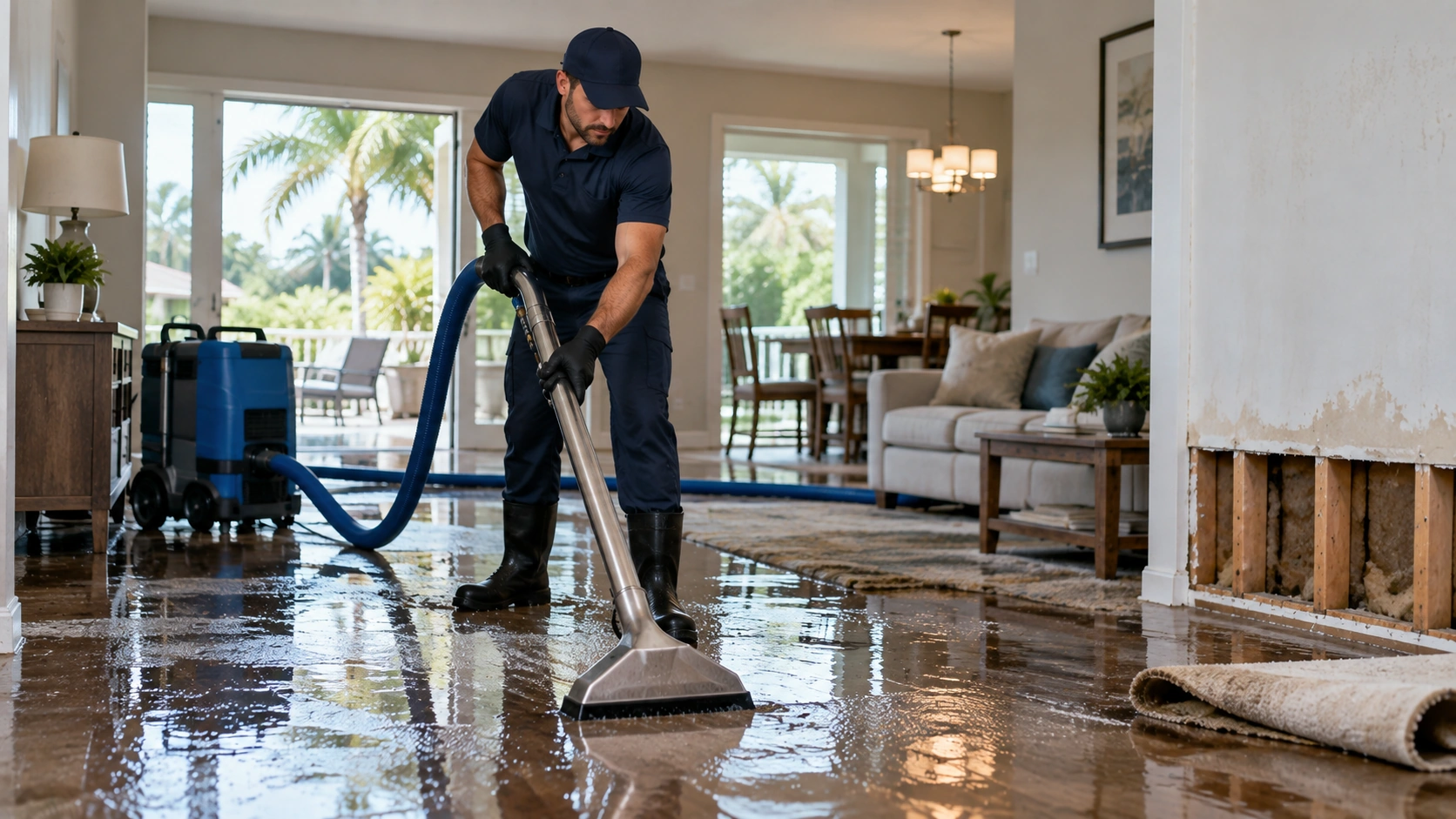
In Goodland, water damage often begins outdoors and moves in: storm tides, heavy rain and standing water around slab-level buildings. Salt water, mud and debris accompany many of these losses, which is why cleaning and drying are handled together. Owners in Marco Island, Naples and Everglades City face a similar mix of causes, but details such as ground elevation, drainage and construction age can change the outcome from one Goodland address to another.
Along Southwest Florida's Gulf coast the wet season runs through the summer months, and heavy rain, tides and canals combine to slow drainage.
Because the local property mix includes single-family homes, vacation rentals and marinas, no two water losses in Goodland look exactly alike. A leak in one type of building may stay within a single room, while the same failure in another can reach neighboring spaces. Restoration planning starts with understanding the building, not with a one-size-fits-all plan.
A restoration project in Goodland usually follows a clear sequence. First the source is identified and stopped or isolated. Next comes an assessment, in which moisture meters and visual inspection are used to find where water has traveled. Standing water is then extracted, and structural drying begins with airflow and dehumidification. Moisture readings are taken repeatedly to monitor progress, and once materials return to normal levels the work moves on to cleaning, restoration and, where needed, repairs. The order matters, because skipping ahead to repairs before materials are dry can trap moisture behind new finishes.
High humidity and low, wet ground make drying in Goodland a matter of patience and measurement. Salt or silt residue may also need to be cleaned before materials are declared dry. Drying is not a single step but a controlled process: airflow across wet surfaces, dehumidification to lower the moisture load in the air and repeated measurements to decide when to adjust or stop. Materials are evaluated individually, since flooring, drywall, cabinetry and framing each dry differently.
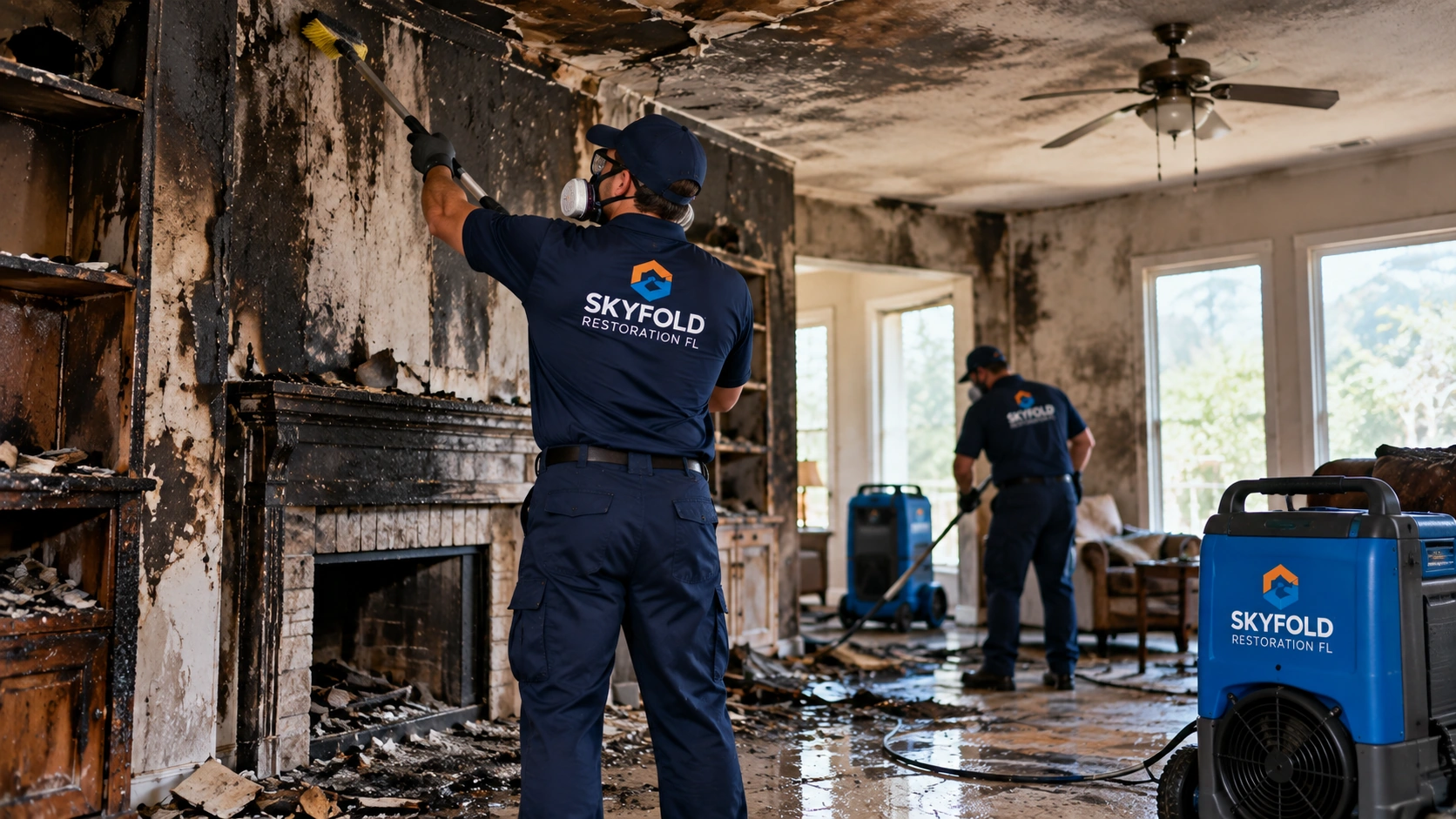
The condition of the water matters as much as the amount. Water from a broken pipe is usually cleaner than water from a storm drain, a flooded yard or a sewer line. When water is contaminated, porous materials such as carpet, padding and drywall may need to be removed, and surfaces need appropriate cleaning. In Goodland, sewage cleanup and flood restoration are treated as their own pathways for that reason.
For a house or townhome in Goodland, the work usually focuses on kitchens, bathrooms, laundry rooms, flooring and ceilings, and on protecting belongings. For single-family homes and vacation rentals, it may also involve coordination with property managers, associations or tenants. Businesses, from marinas and waterfront businesses, restaurants and retail and community buildings, add questions about downtime, inventory, records and reopening.
If you are dealing with water in Goodland, call as soon as you can safely do so. Shut off the water source if it is safe, avoid electrical hazards, photograph the damage and move valuables out of the wet area. Do not wait for surfaces to look dry, because moisture in walls and floors often remains long after the visible signs fade.