✓
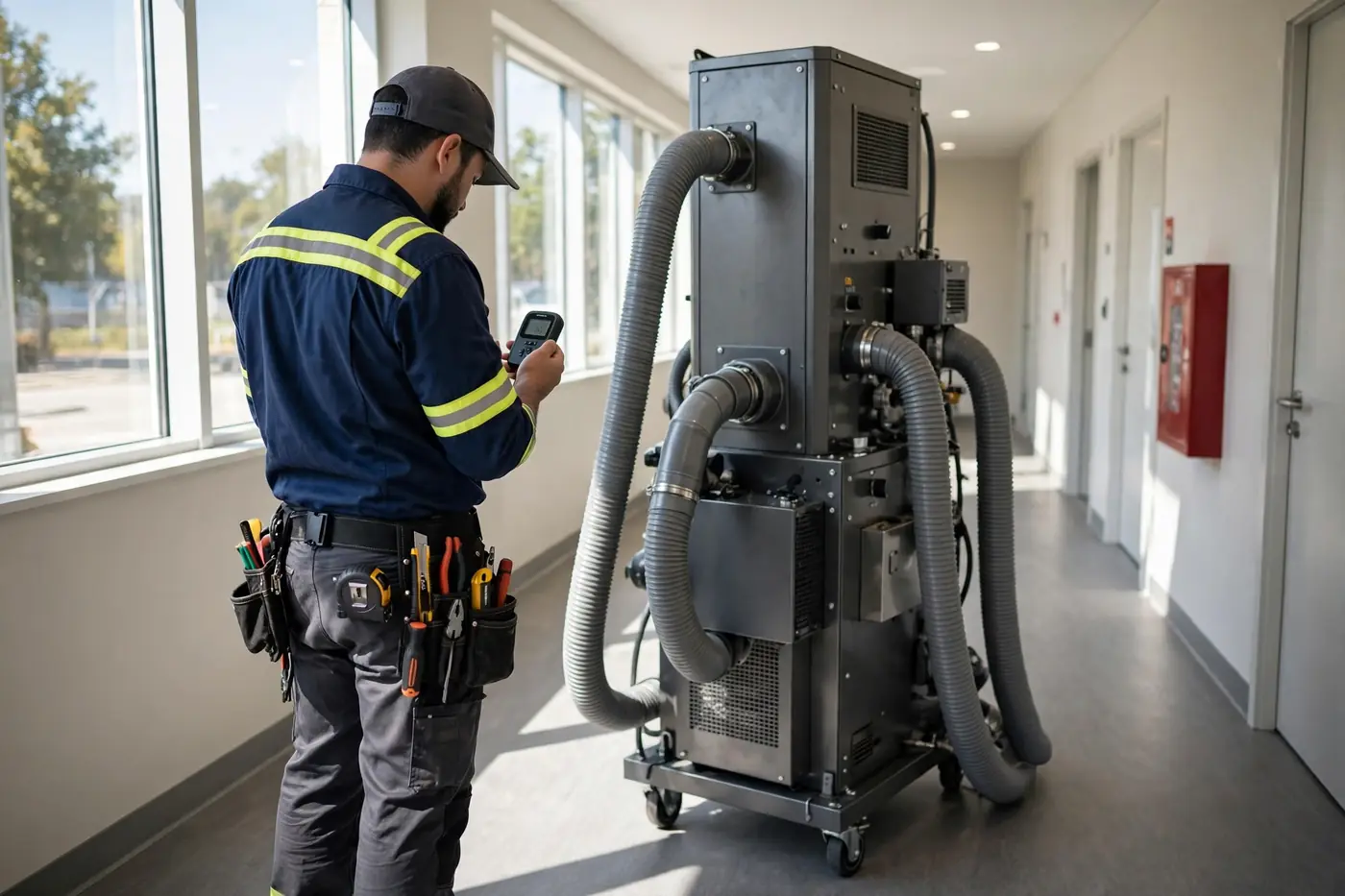
Measure moisture
Part of the structural drying in florida workflow, handled in a safety-first sequence.
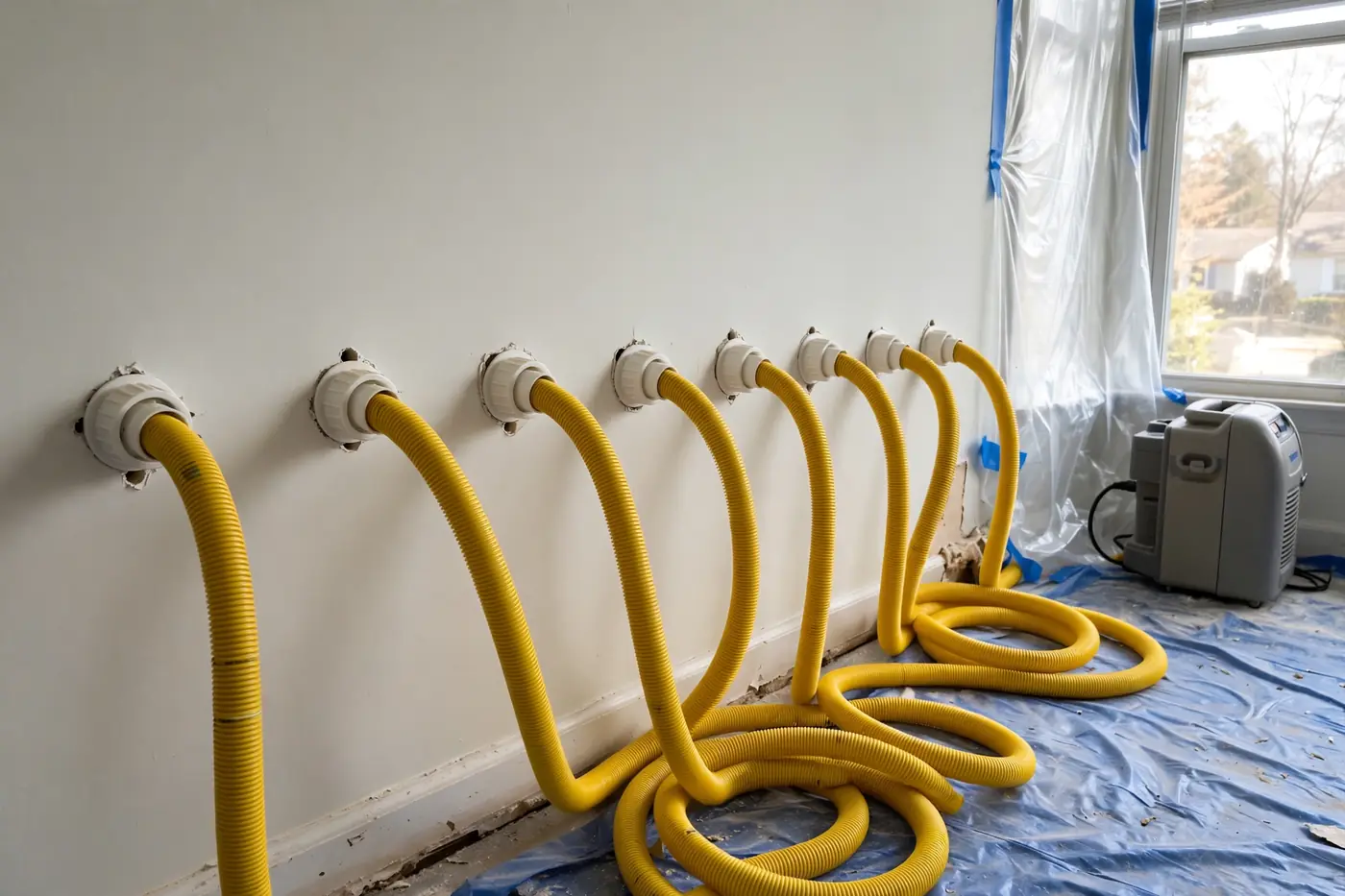
Moisture-focused drying support for floors, walls, ceilings and other affected building materials.
Water-loss response depends on the source, duration, affected materials and safe access to the property.
Part of the structural drying in florida workflow, handled in a safety-first sequence.
Part of the structural drying in florida workflow, handled in a safety-first sequence.
Part of the structural drying in florida workflow, handled in a safety-first sequence.
Part of the structural drying in florida workflow, handled in a safety-first sequence.
Protect people first, avoid unsafe electrical conditions, document the visible loss and seek appropriate restoration support.
Keep people away from dangerous areas and call 911 for immediate hazards.
Stop the water source only when doing so can be done safely.
Photograph visible damage and record the time, source and affected areas.
Move toward water removal, drying and moisture monitoring as soon as appropriate.
Coordinated assessment, extraction, drying and cleanup after a water loss.
View pageRapid response pathways for active or spreading water damage.
View pageStanding-water removal and immediate moisture control.
View pageCleanup and drying planning after flood-related water intrusion.
View pageRemoval of unwanted water from accessible residential and commercial spaces.
View pageDrying a water-damaged building is applied physics, not guesswork. Professionals trained in applied structural drying follow the IICRC S500 Standard, which uses psychrometrics, the science of air temperature, humidity, and moisture movement, to dry structures quickly without causing secondary damage.
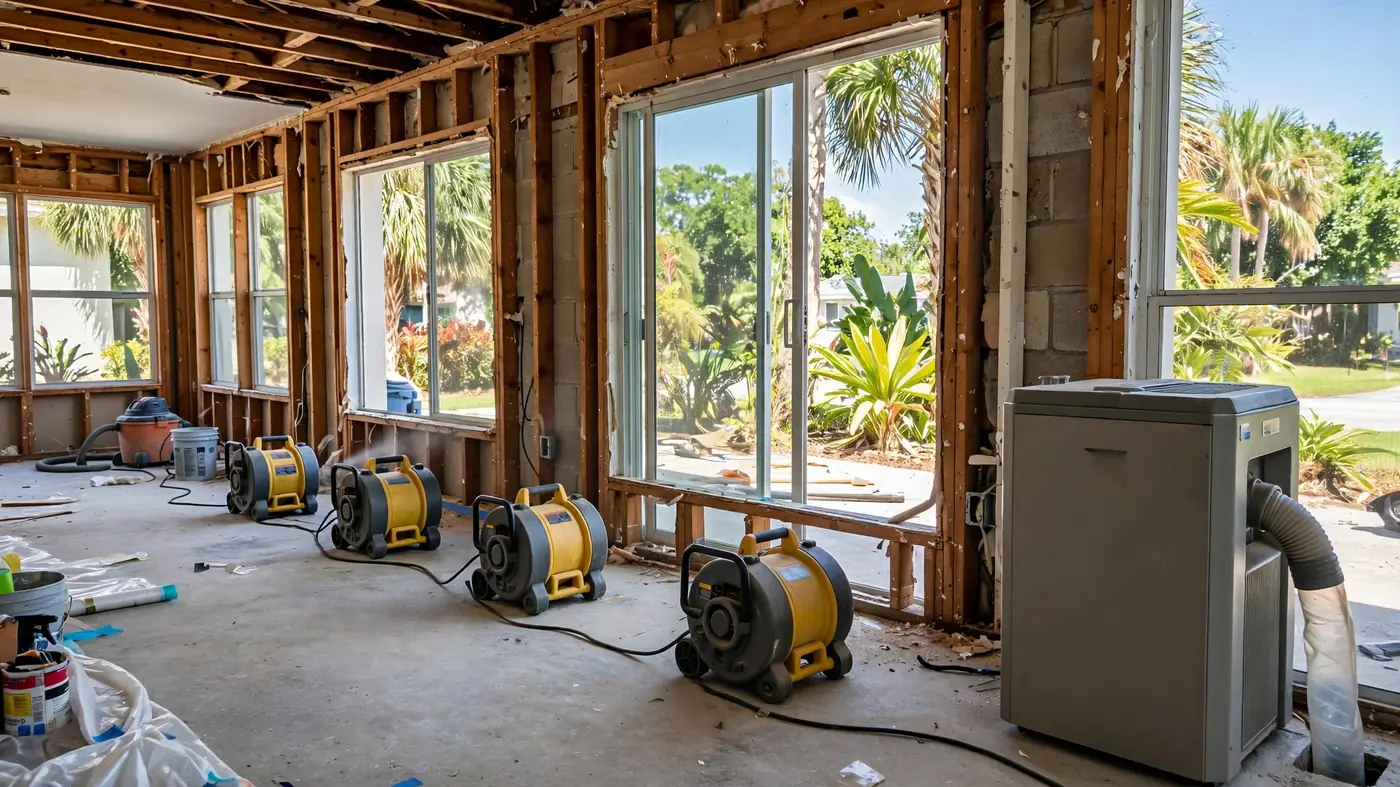
The equipment lineup is specific. Low-grain refrigerant (LGR) dehumidifiers pull large volumes of moisture from the air, even in Florida's humid conditions. Desiccant dehumidifiers handle dense materials like hardwood and concrete. Axial and centrifugal air movers create high-velocity airflow across wet surfaces, speeding evaporation. Technicians arrange this equipment to create a balanced drying system, sometimes building containment chambers so dehumidifiers work on the wet area instead of the whole house.
The critical concept is the dry standard: the moisture content of unaffected materials in your home, measured on day one. Drying is complete when wet materials return to that standard, not when they feel dry to the touch. Surfaces can feel dry while wall cavities and subfloors remain saturated, which is exactly how hidden mold starts. Our guide on what structural drying involves explains the process in plain language, and how long drying takes covers typical timelines. Skyfold connects you with Florida drying professionals 24/7 at (833) 606-6010.
How do you know the drying is really done? Professionals prove it with documentation, not promises. Every serious structural drying job includes daily drying logs: records of indoor temperature, relative humidity, grains of moisture per pound of air, and pin meter readings from each affected material, taken at the start and throughout the job.
These logs serve two purposes. First, they let technicians adjust equipment daily, moving air movers, adding dehumidification, or opening wall cavities when readings stall. Second, they become powerful evidence for your insurance claim. Adjusters trust numbers: a log showing drywall dropping from 28 percent moisture content to the 10 percent dry standard over four days is difficult to dispute, and it rebuts any suggestion that the damage was minor or pre-existing.
Final verification typically combines moisture meter readings at or below the dry standard with thermal imaging to confirm no cold, damp pockets remain behind walls or under floors. When Skyfold connects you with a local team for water extraction and drying, ask whether daily drying logs are included. If a provider cannot show you readings, they cannot prove the job is complete. Pair this documentation with our insurance documentation guidance to build a claim file your adjuster will take seriously.
Call the existing Skyfold Restoration number or submit the request form with the property address and what happened.