
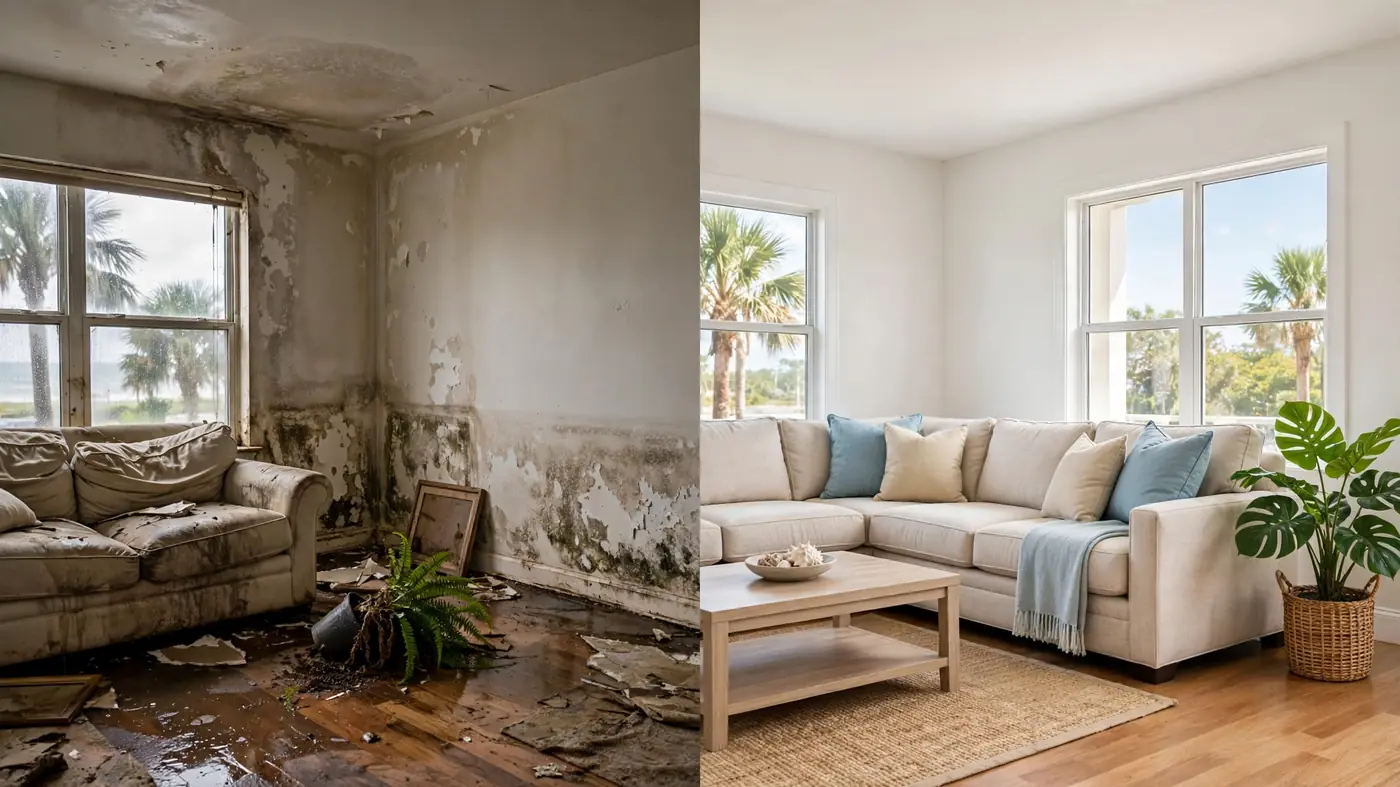
A water loss at home is personal in a way a commercial loss never is. It is your kitchen floor, your child's bedroom, the hallway you walk every morning. Skyfold Restoration's residential division is built around that reality: fast emergency response, careful protection of your belongings, drying verified by moisture readings, and a documented file your homeowners insurer can actually use, anywhere in Florida.
We serve single-family homes, condos, townhomes, manufactured homes and rental properties statewide, from the Panhandle to the Keys. One call to (833) 606-6010 reaches the intake team at any hour.
What's Included
- 24/7 emergency response for Florida homes
- Water extraction and structural drying
- Furniture and contents protection or pack-out coordination
- Moisture mapping with documented readings
- Direct insurance billing and claim documentation
- Repairs coordinated after verified drying
Why Skyfold Restoration FL for residential water damage restoration?
Florida homes take water from every direction: summer downpours that overwhelm drainage, hurricanes and tropical storms, aging plumbing in older housing stock, AC condensate lines that clog silently, and water heaters that fail without warning. Our residential crews work with those realities daily. They know which materials in a Florida home hide moisture longest, slab foundations, tile over concrete, and the wall cavities behind kitchen cabinets, and they dry to a measured standard instead of a calendar guess.
Because this is a network model, the crew dispatched to your home is coordinated for your loss type and your address, with the equipment list confirmed at intake. You get one point of contact, a written scope before non-emergency work begins, and progress updates while drying runs.
Our 4-Step Restoration Process
The same proven process on every home, from a single-room leak to a flooded ground floor.
Emergency Response
Call (833) 606-6010 any time. Intake confirms your address, the source of the water and any safety concerns, then dispatches the right crew and equipment.
Inspection & Assessment
Moisture meters and thermal imaging map how far the water traveled, including inside walls and under floors, and the written scope is agreed with you.
Extraction & Drying
Standing water is removed, then air movers and dehumidifiers dry the structure with daily readings until targets are met.
Restoration & Rebuild
Once the home passes dry verification, damaged drywall, flooring and trim are repaired or replaced to pre-loss condition.
Need Residential Water Damage Restoration?
If water is in your home now, do not wait for business hours. Call (833) 606-6010. If the loss is older and you are planning repairs, start with your city page for local detail, or read the homeowner guides in our water damage help center.
Home Types We Restore
Single-family homes are the core of our residential work, from slab-on-grade ranches to two-story homes where a second-floor bathroom leak travels down through ceilings. Condos and townhomes add shared walls and HOA rules, so documentation covers the units above, below and beside yours. Manufactured and mobile homes use different subfloor and belly-board construction that traps water underneath, and they get a specific inspection pattern. Rental properties and second homes are handled with photo reporting to owners who may be out of state, which matters in Florida's snowbird communities. Landlords and property managers can also use our commercial restoration coordination for multi-unit portfolios.
Documentation Your Homeowners Claim Needs
Your insurer will ask when the loss happened, what caused it, and what was done to stop it getting worse. The residential file we build answers all three: dated photographs of the source and the damage, moisture readings from the first visit through dry verification, equipment and drying logs, and a line-item scope of mitigation and repairs. Keep your own photos and receipts too, and report the loss promptly. Florida's deadlines are real: one year from the date of loss for a hurricane claim, 18 months for a supplemental claim.
For a deeper walkthrough, see our insurance claims assistance page and the water damage cost guide.