AC Water Leak in Florida
An AC water leak in Florida is one of the most common causes of ceiling stains, soggy drywall, and hidden mold. With air conditioners running nearly year round in Florida heat and humidity, even a slow condensate drip can cause serious water damage before you notice it. This guide explains why AC leaks happen, the warning signs, and exactly what to do.
Fast Answer
If your AC is leaking water in Florida, turn the system off at the thermostat, shut off power at the breaker if water is near electrical components, and contain the drip with towels or a bucket. Most leaks come from a clogged condensate drain line, a full or cracked drain pan, or a frozen evaporator coil. Dry visible water, then check whether ceilings or walls feel soft or stained, since hidden damage is common.
Why Air Conditioners Leak Water in Florida
Florida air conditioners pull gallons of moisture out of humid indoor air every day. That water has to go somewhere, and when the drainage path fails, it goes into your home instead.
Every air conditioner produces condensate, which is simply water pulled from humid air as it passes over the cold evaporator coil. In Florida, where indoor humidity stays high for most of the year and systems run eight to ten months straight, a typical residential unit can produce several gallons of condensate per day during peak summer. Under normal conditions, this water collects in a drain pan and flows out through the condensate drain line to the outside of the home or into a plumbing drain.
An AC water leak starts when any part of that path breaks down. The single most common cause in Florida homes is a clogged condensate drain line. Warm, dark, constantly damp drain lines breed algae and slime that build up inside the narrow pipe until water can no longer pass. The pan fills, overflows, and water drips into the ceiling, walls, or flooring below. Homes in South Florida and Central Florida, where cooling season is longest, see this most often.
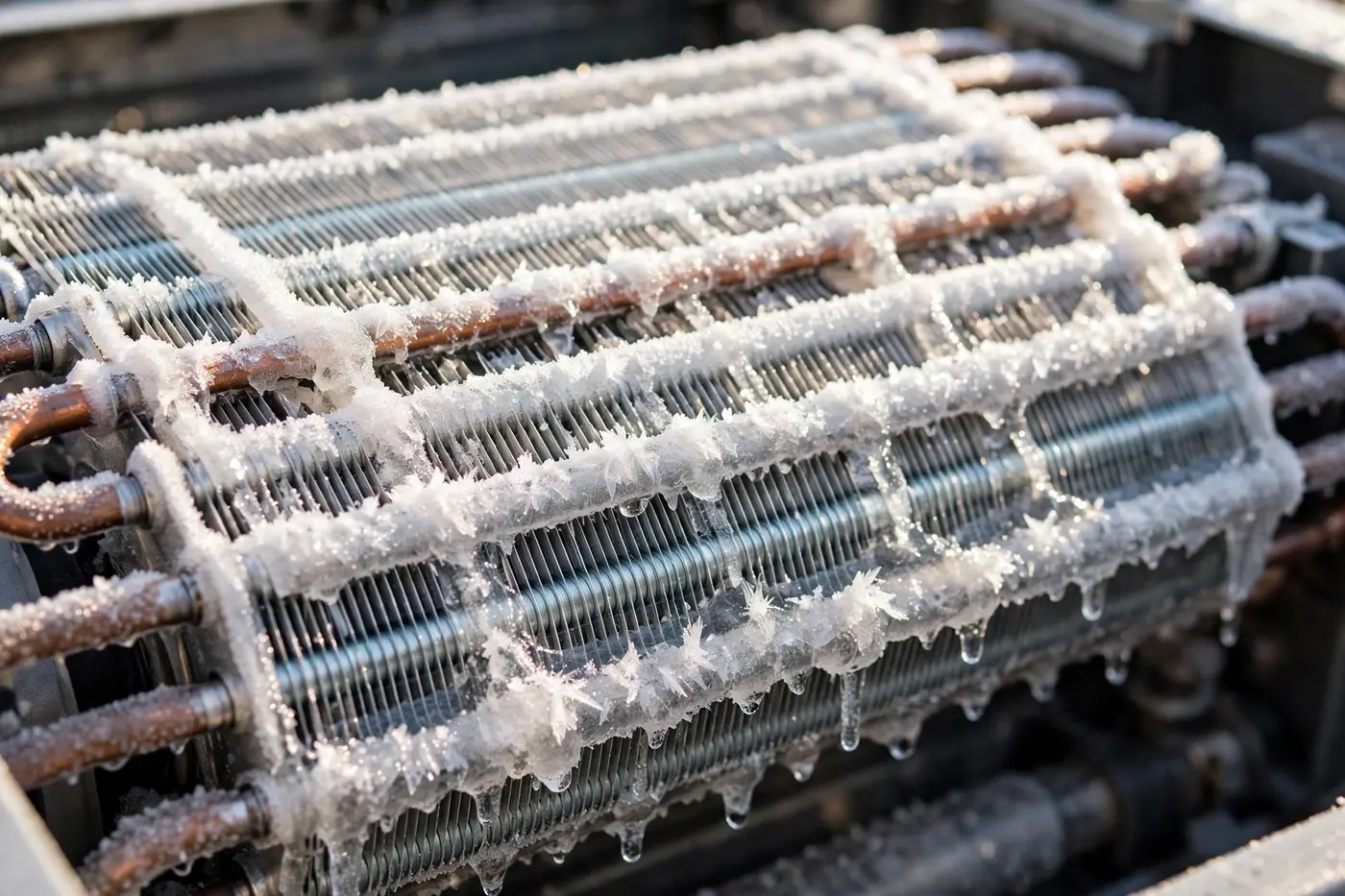
Other frequent causes include a cracked or rusted drain pan, especially in older air handlers where metal pans corrode. A frozen evaporator coil is another culprit: when airflow is restricted by a dirty filter or low refrigerant, the coil ices over, then releases a sudden rush of meltwater that overwhelms the pan. Improper installation matters too. If the air handler or the drain line was not installed with the correct slope, water sits in the line, accelerating clogs. In Florida attics, where many air handlers are located, installers sometimes run long horizontal drain lines that are especially prone to sagging and blockages.
A float switch, also called a condensate overflow switch, is a small safety device designed to shut the AC off when the drain pan fills too high. Many Florida homes have one, and it is required by current building code for attic installations, but older systems often lack it. Without a float switch, an overflowing pan can leak for days or weeks while the homeowner is away, which is exactly how small AC leaks turn into major water damage restoration projects.
Signs Your AC Is Leaking Water
AC leaks often start small and hidden. Catching these early signs can save you from a ruined ceiling or a mold problem.
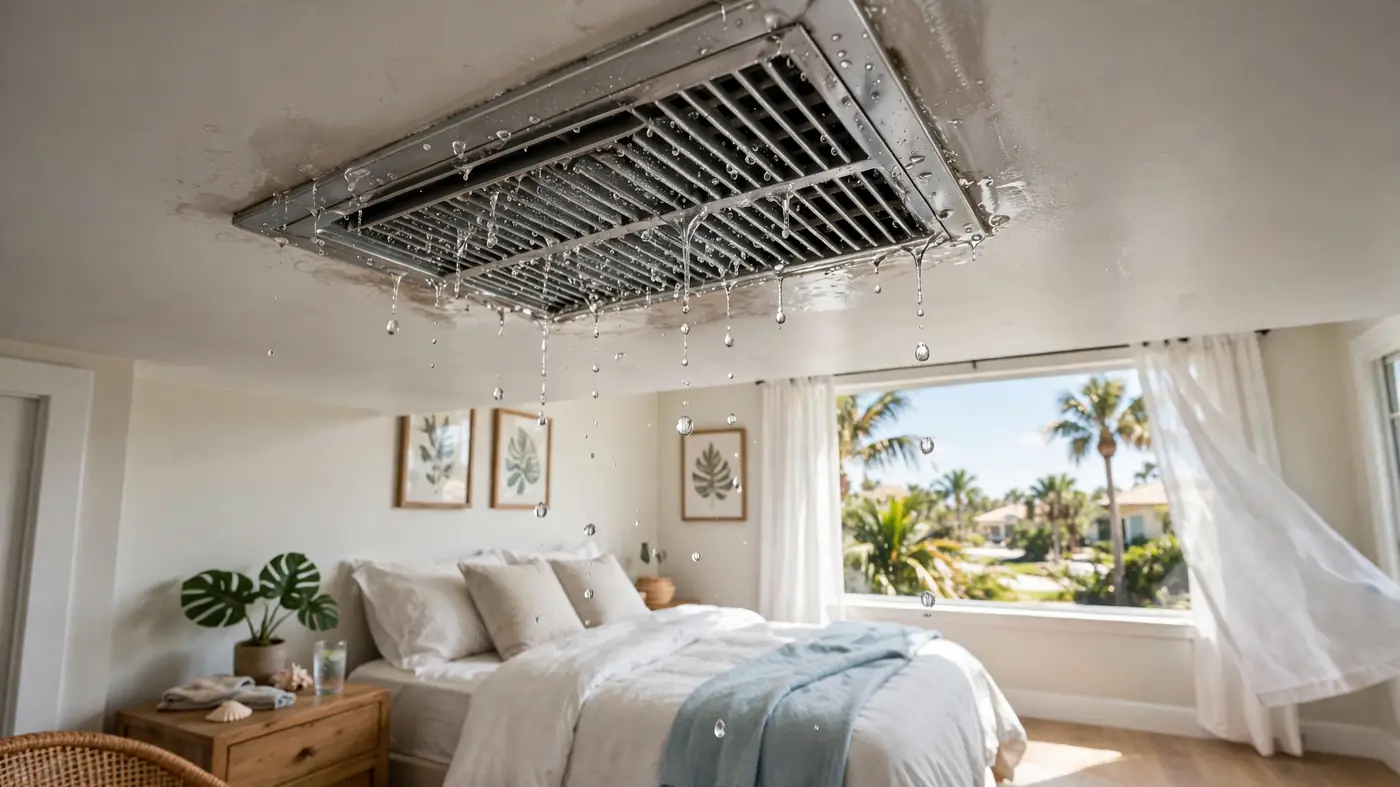
- Water stains on ceilings or walls. Yellowish or brownish rings, especially below an attic air handler or near a closet housing the indoor unit, are the classic sign of a condensate leak. Stains often appear on the ceiling of the room directly beneath the air handler.
- Puddles or damp spots near the indoor unit. Water pooling around the base of an air handler, in a utility closet, or on a garage floor beneath the unit means the pan is overflowing or the line is disconnected.
- A musty or damp smell when the AC runs. Persistent mustiness suggests moisture is sitting somewhere it should not be, often inside ductwork, the drain pan, or saturated drywall. Learn more about signs of water damage throughout the home.
- The AC shuts off unexpectedly. If a float switch is installed and working, it will kill power to the system when the pan fills. A system that keeps shutting down may be protecting you from an active leak.
- Visible mold or mildew near vents or the air handler. Dark spotting on vent covers, return grilles, or the closet walls around the unit points to chronic moisture.
- Higher indoor humidity than usual. If the home feels sticky even with the AC running, the system may be struggling with drainage or airflow problems that also cause leaks.
- Dripping sounds inside walls or ceilings. In quiet moments you may hear intermittent dripping when the system cycles, a sign water is falling where it should not.
Because Florida homes often place air handlers in hot attics, leaks there can soak insulation and ceiling drywall long before any stain appears below. If you suspect a leak, check the attic directly rather than waiting for visible damage downstairs.
What to Do Right Now for an AC Water Leak
Act quickly but safely. Water and electricity are a dangerous combination, so put safety first.
- Turn the AC off at the thermostat. Stopping the system stops new condensate from forming. Switch the thermostat to off, not just to a higher temperature.
- Shut off power if water is near electrical parts. If water is dripping onto the air handler's electrical compartment, the breaker panel, or any outlets, turn off the breaker for the air handler before touching anything wet. If you are unsure, call for help instead of guessing.
- Contain the water. Place towels, buckets, or a wet vacuum under the drip. Move furniture, electronics, and valuables away from the wet area. If a ceiling is bulging with trapped water, do not poke it, since a sudden release can flood the room.
- Check the condensate drain line outside. Find where the line exits the house, usually a PVC pipe near the outdoor unit or on an exterior wall. If it is barely dripping while the system was running, it is likely clogged. You can try clearing it with a wet/dry vacuum on the outside end, which often pulls the clog out.
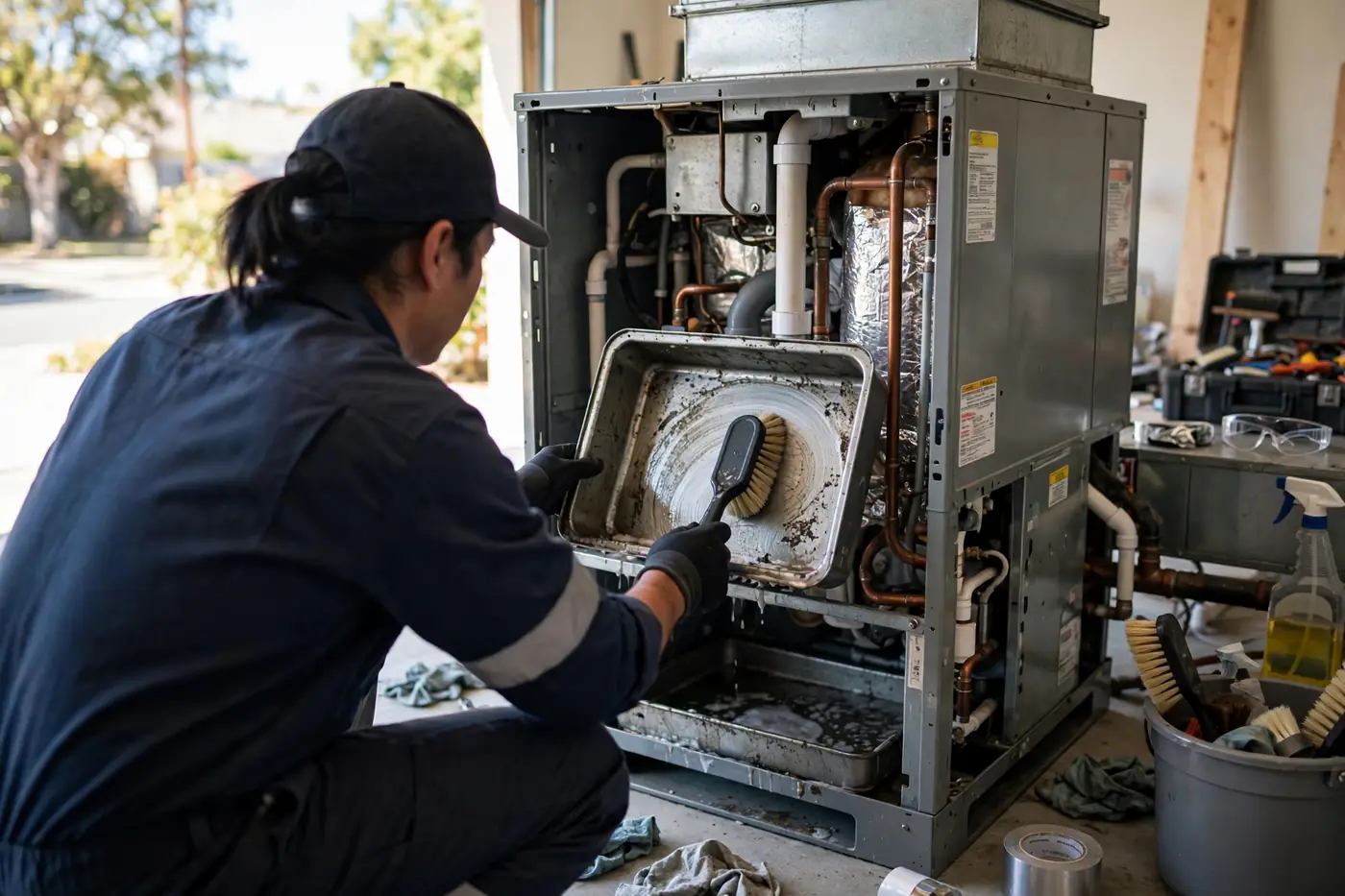
- Look at the drain pan. If you can safely access the air handler, check whether the pan is full, cracked, or rusted through. Do not attempt electrical repairs yourself.
- Document the damage. Take photos of stains, puddles, and any damaged belongings before cleanup. Good documentation helps with insurance documentation if you file a claim.
- Start drying. Mop up standing water, run fans, and if you have one, run a dehumidifier. In Florida humidity, wet drywall can start growing mold within 24 to 48 hours, so drying quickly matters. For soaked ceilings, walls, or flooring, consider professional water extraction and structural drying.
If water has reached drywall, insulation, or subflooring, surface drying is not enough. Moisture trapped inside building materials keeps feeding mold long after the visible puddle is gone. A moisture meter reading by a restoration professional can tell you whether the structure is actually dry. See our emergency water damage checklist for a printable version of these steps.
What Happens If an AC Leak Goes Unfixed
In Florida's climate, the window between a small leak and a big problem is short.
Within the first day or two, a slow AC drip mostly affects surfaces: paint bubbles, drywall softens, and carpet padding absorbs water. This stage is usually reversible with prompt drying. Between roughly two days and a week, Florida's heat and humidity accelerate mold growth on damp drywall, wood, and insulation. Musty odors appear, and a plumbing-style fix becomes a mold remediation situation. Our mold after water leak service addresses exactly this progression.
After a week or more of continuous leaking, structural materials deteriorate. Drywall crumbles, ceiling sections can sag or collapse under saturated insulation, wood framing and subflooring begin to rot, and mold can spread through wall cavities and ductwork. The repair then involves drywall and insulation replacement, sometimes flooring too. The cost difference between catching a clogged drain line early and rebuilding a collapsed ceiling is enormous, which is why Florida homeowners should treat any AC leak as urgent.
| Leak source | Typical sign | Usual fix |
|---|---|---|
| Clogged condensate drain line | Pan overflowing, little or no drip from outside line | Vacuum or flush the line, install a float switch |
| Cracked or rusted drain pan | Water under the air handler even with clear line | Replace the pan |
| Frozen evaporator coil | Ice on indoor coil, sudden large water release | Change filter, check refrigerant and airflow |
| Disconnected or sagging drain line | Water dripping inside attic or wall cavity | Reconnect and re-slope the line |
| Missing float switch | System keeps running while pan overflows | Install an overflow shutoff switch |
Preventing AC Water Leaks in Florida Homes
Most AC leaks are preventable with simple, regular maintenance.
- Flush the condensate line every few months. Pouring a cup of white vinegar or a dedicated drain-line treatment through the line's access tee helps prevent the algae and slime buildup that causes most clogs. Avoid harsh chemical drain cleaners, which can damage PVC and pans.
- Change or clean the air filter on schedule. A clogged filter restricts airflow, which can freeze the evaporator coil and trigger a sudden overflow. In Florida, check filters monthly during cooling season.
- Install a float switch if you do not have one. This inexpensive safety device shuts the system down before the pan can overflow. It is one of the highest-value upgrades for attic air handlers.
- Schedule annual professional maintenance. A technician can check refrigerant levels, clean the coil and pan, verify drain slope, and catch corrosion before the pan fails.
- Keep the area around the air handler clear. Stored items in closets or attics can knock drain lines loose or hide early drips. Leave the unit accessible for inspection.
- Consider a secondary drain pan. For attic installations, a larger secondary pan under the entire unit catches overflow from a failed primary pan and routes it to a visible location.
If your system is more than 12 to 15 years old, ask your HVAC technician about the drain pan and coils at the next service visit. Corrosion failures cluster in older equipment, and proactive replacement is far cheaper than ceiling repair. For broader guidance, see water damage help and our emergency response guide.
Common Questions
The most common reason is a clogged condensate drain line, which causes the drain pan to overflow. Other causes include a cracked pan, a frozen evaporator coil, or a disconnected drain line. In Florida, algae growth in drain lines makes clogs especially frequent.
It can be. A slow drip caught early is a maintenance issue, but water near electrical components, a bulging ceiling, or a leak discovered after days away from home warrants urgent attention. When in doubt, shut the system off and call for help.
Often, yes. A wet/dry vacuum on the outside end of the drain line can pull out many clogs, and regular vinegar flushes help prevent them. Do not attempt electrical work, and call a professional if the pan is cracked or the coil is freezing repeatedly.
In Florida's warm, humid climate, mold can begin growing on damp drywall or wood within 24 to 48 hours. That is why fast drying matters so much, and why hidden leaks that go unnoticed for days often involve mold.
Sudden and accidental water damage from an AC leak is often covered, while damage from long-term neglect or lack of maintenance may not be. Document everything with photos and review your policy. Our insurance documentation guide explains what to record.
A float switch is a small sensor in the drain pan that shuts off the AC when water rises too high, preventing overflows. It is inexpensive, required by code for many attic installations in Florida, and strongly recommended for every system.
An HVAC technician fixes the AC itself, while a water damage restoration professional handles soaked drywall, insulation, drying, and mold. If ceilings or walls are wet, call for water damage restoration in addition to your AC technician.
Related Water Damage Help
If you are dealing with an AC leak, these guides cover the next steps: water extraction for standing water, structural drying for wet drywall and framing, and mold after water leak if musty odors have started. For the bigger picture, see what to do when you find water damage, signs of water damage, and roof leak water damage, which causes similar ceiling stains.
Need Help With an AC Water Leak?
Call now to discuss water extraction, drying, and repair for AC leak damage anywhere in Florida.