Florida water damage emergency guidance

What to Do After Water Damage: Emergency Help for Florida Property Owners

If you have just discovered water damage, start with safety and source control. Protect people and pets, stop the water source if it is safe to do so, avoid electrical hazards, protect important belongings when safe, document visible damage, and arrange professional assessment when the loss is significant, hidden, contaminated, or difficult to control. This page explains what to do now, what to avoid, when restoration help may be appropriate, what happens after extraction, and how insurance documentation can fit into the process.

Start here

Water Damage? Start Here.

Use these steps as a safety-first first response. Conditions differ, so do not take an action that creates an electrical, structural or contamination hazard.

1
Protect people and pets.
Move away from unsafe areas and keep children and pets out of contaminated or hazardous spaces.
2
Stop the source if it is safe.
Use normal household controls when you can do so safely; do not attempt dangerous plumbing work.
3
Avoid electrical hazards.
Do not enter unsafe standing water or operate electrical equipment in wet areas where a hazard may exist.
4
Document visible damage.
Take photos or video of affected rooms, materials, contents and the apparent source when safe.
5
Protect belongings when safe.
Move unaffected valuables away from wet areas only when doing so will not expose you to a hazard.
6
Get qualified help when needed.
Significant, hidden, contaminated or widespread water losses may require professional assessment, extraction and drying.
Safety first

Water Damage Safety: What to Do First

Water damage can create secondary hazards. The safest decision is often to limit exposure rather than trying to perform a risky cleanup or repair.

Electrical safety

Do not enter standing water where electrical hazards may exist, and do not operate appliances, extension cords or other electrical equipment in unsafe wet areas. Do not take risks to reach a switch, outlet or panel. Use appropriate professional or electrical guidance when electrical systems may have been affected.

Structural safety

Severe ceiling damage, sagging ceilings, major movement, extensive flooding, damaged stairs or obvious building instability may require leaving the area and seeking professional help. A remote webpage cannot determine whether a structure is safe to occupy.

Contaminated water

Sewage, unknown floodwater and other contaminated water require extra caution. Avoid unnecessary contact and keep people and pets away. Specialized cleanup may be needed because contamination changes the handling, cleaning and disposal considerations.

Safety rule: only stop a water source, move belongings or perform cleanup steps when the action can be completed without electrical, structural, contamination or other hazards.
Source control

Stop the Water Source When It Is Safe

Stopping the source can limit additional water entry, but it does not remove water that has already entered the property.

Burst pipe: use a normal household shutoff only when it is safely accessible.
Supply-line leak: isolate the fixture or appliance when the control is safe to reach.
Washing machine: stop the cycle and source when safely possible.
Dishwasher: stop operation and isolate the source if the controls are safe.
Water heater: address the water source only when it can be done without electrical or other hazards.
Toilet overflow: control the water source safely while determining whether contamination is involved.

Important: source repair and restoration are not always the same job. A plumber, roofer or HVAC professional may address the cause, while a restoration process addresses the water already affecting building materials.

First-hour plan

What to Do During the First Hour After Water Damage

Use the timeline as a practical checklist rather than a promise about how quickly any restoration work must be completed.

0–10 minutes

Protect and control

Move away from unsafe areas, keep children and pets out, identify the obvious source if possible, and stop or isolate it only when safe.

10–30 minutes

Limit exposure and document

Protect important belongings when safe, photograph or record affected areas, identify rooms reached by water, and note the apparent cause.

30–60 minutes

Arrange appropriate help

Contact restoration or other qualified professionals when the loss is significant, hidden, contaminated or difficult to control. Preserve information relevant to insurance.

Avoid secondary damage

What NOT to Do After Water Damage

!Do not ignore standing water when it may continue to affect building materials.
!Do not assume a surface is dry just because it looks or feels dry.
!Do not use electrical equipment around unsafe standing water.
!Do not enter contaminated water unnecessarily.
!Do not aggressively disturb damaged materials before the situation is assessed.
!Do not cover recurring moisture problems instead of addressing the source.
!Do not delay assessment after extensive, hidden or contaminated water damage.
!Do not assume insurance will automatically cover the loss.
Documentation

Document the Water Damage Before Cleanup

Good documentation can help explain what happened and what changed during mitigation, but it does not guarantee insurance coverage or claim approval.

When safe, photograph and record:

  • the apparent source of water
  • each affected room
  • standing water or visible saturation
  • damaged flooring, drywall, ceilings, cabinets and contents
  • visible staining and other changes
Keep records: note when damage was discovered, preserve receipts related to emergency response, and keep estimates, invoices, drying records or other restoration documentation that may be provided.
Insurance and records

What to Know About Insurance After Water Damage

Insurance is policy-specific. The cause of loss, exclusions, deductibles and policy terms all matter, so restoration guidance is not a coverage determination.

Useful steps

  • Review the policy and contact the insurer when appropriate.
  • Document before-and-after conditions when safe.
  • Keep restoration invoices, estimates and records.
  • Keep moisture or drying documentation if provided.
  • Ask the adjuster what documentation is required.

Mitigation vs. repairs

Water extraction, drying and other mitigation work address the immediate effects of a water event. Repairs or reconstruction address damaged building components. Insurance may treat these parts differently depending on the policy and cause.

Water Damage Insurance Guide →
Know when to get help

When Should You Call a Water Damage Restoration Professional?

Not every minor spill requires professional restoration. The case for professional assessment becomes stronger when water is widespread, hidden, contaminated, persistent or connected to building materials that need controlled drying.

Extensive standing water or water spread across multiple rooms
Water inside walls, ceilings, floors or other concealed areas
Soaked flooring, subfloors, drywall, insulation or cabinets
Sewage or other contaminated water
Flood or storm-related water intrusion
Repeated or unexplained water intrusion
Commercial property disruption or a larger affected footprint
Suspected mold after prolonged moisture
Make the distinction

Is It a Spill or a Water Damage Emergency?

Small, controlled spill

  • Limited area
  • Removed promptly
  • No meaningful material absorption
  • No hidden moisture

A minor event may not require professional restoration when it is fully controlled and affected materials remain dry.

Significant water damage

  • Standing water
  • Water entering walls or floors
  • Soaked porous materials
  • Large or prolonged exposure

Larger events can require extraction, structural drying, monitoring, cleaning and repairs.

Contaminated or unknown water

  • Sewage or wastewater
  • Unknown floodwater
  • Water contacting contaminants
  • Potential electrical or structural hazards

Treat uncertain or contaminated water cautiously and seek professional guidance.

Problem-specific help

What to Do for Different Water Damage Emergencies

Use these short pathways to connect a problem to a practical next step. They do not replace an on-site assessment.

Emergency scenario

Burst Pipe

If a pipe bursts, protect people, stop the source only when it is safe, document the affected space, and arrange extraction and drying when water has reached floors, walls, ceilings or contents.

Water Extraction →
Emergency scenario

Roof Leak

Avoid unsafe roof access, document interior water entry, and arrange assessment of the water intrusion. Source repair may be separate from mitigation and drying.

Storm / Water Restoration →
Emergency scenario

Water Heater Leak

Safely isolate the source when possible, avoid electrical hazards, and assess surrounding floors, walls and contents for absorbed water.

Water Extraction →
Emergency scenario

Washing Machine Leak

Stop the source, protect the area from electrical hazards, document the damage, and check flooring, baseboards, cabinetry and nearby walls.

Water Damage Restoration →
Emergency scenario

AC / HVAC Leak

Address a condensate issue when safe, protect the affected area, and assess ceiling, wall, attic or flooring moisture.

Structural Drying →
Emergency scenario

Toilet Overflow

Determine whether contamination is involved, avoid unnecessary contact, and use specialized cleanup when wastewater or sewage is present.

Sewage Cleanup →
Emergency scenario

Flooding

Prioritize safety, avoid unknown or contaminated floodwater, document visible damage, and arrange extraction and drying when significantly affected.

Flood Damage Restoration →
Emergency scenario

Sewage Backup

Keep people and pets away, avoid contact with wastewater, and arrange appropriate contaminated-water cleanup and restoration.

Sewage Cleanup →
Florida weather

What to Do After Flooding or Hurricane Water Damage

Florida water emergencies can involve hurricanes, tropical storms, heavy rainfall, flooding and wind-driven rain. A single event may create several problems at once: water entering through a damaged roof, standing water indoors, wet contents, and possible contamination depending on the source.

1Do not enter unsafe floodwater or areas with possible electrical hazards.
2Keep people and pets out of contaminated or structurally uncertain areas.
3Document visible damage when it is safe to do so.
4Arrange appropriate extraction, cleanup and drying when the property is significantly affected.

Florida relationship: storm event → flooding or water intrusion → moisture/contamination considerations → extraction → drying → restoration.

Contaminated water

What to Do After a Sewage Backup

A sewage backup is not the same as a clean-water leak. Avoid contact with wastewater, keep children and pets away, and do not attempt unsafe cleanup or unnecessary material handling. Contaminated water can affect porous flooring, drywall, cabinets, contents and other materials, and the appropriate cleanup process depends on the conditions of the loss.

What happens next

What Happens After the Water Is Removed?

Visible water removal is often one stage of the overall restoration process. Materials can continue to hold moisture after the obvious water is gone.

Water Extraction
Moisture Assessment
Structural Drying
Dehumidification
Monitoring
Cleaning / Repairs

Extraction removes bulk water. Drying and dehumidification address moisture that remains in building materials and the surrounding environment. Monitoring helps determine progress, while cleaning, sanitization, repairs or reconstruction depend on the nature and extent of the loss.

Drying expectations

How Long Does Water Damage Take to Dry?

There is no single guaranteed drying period. Drying depends on the amount of water, affected materials, room conditions, humidity, temperature, air movement, dehumidification, contamination and the extent of the loss.

Materials matter

Drywall, wood, flooring, insulation, carpet and subfloors can hold and release moisture differently.

Room conditions matter

Humidity, temperature and airflow influence evaporation and dehumidification.

Monitoring matters

Where appropriate, moisture readings and repeated observations can help determine whether materials are moving toward a dry condition.

Follow-on moisture

Can Water Damage Lead to Mold?

Water intrusion combined with prolonged moisture can increase the risk of mold growth, but not every water event causes mold. Prompt source control, extraction and drying can reduce how long building materials remain damp. Hidden moisture can still persist behind surfaces, under flooring or in other concealed areas.

When visible growth or persistent moisture is present, the appropriate next step depends on the source, affected materials and extent of the condition. Do not make medical conclusions from a water event; focus first on correcting moisture conditions and obtaining appropriate assessment or remediation when needed.

Explore Mold Remediation →
Reduce further damage

How to Reduce Further Property Damage

Stop the source when safe.
Move unaffected valuables away from wet areas only when safe.
Remove accessible standing water only with safe methods.
Document affected areas before major changes when practical.
Seek professional drying when water has reached building materials or concealed areas.
Do not use electrical equipment in unsafe wet conditions.

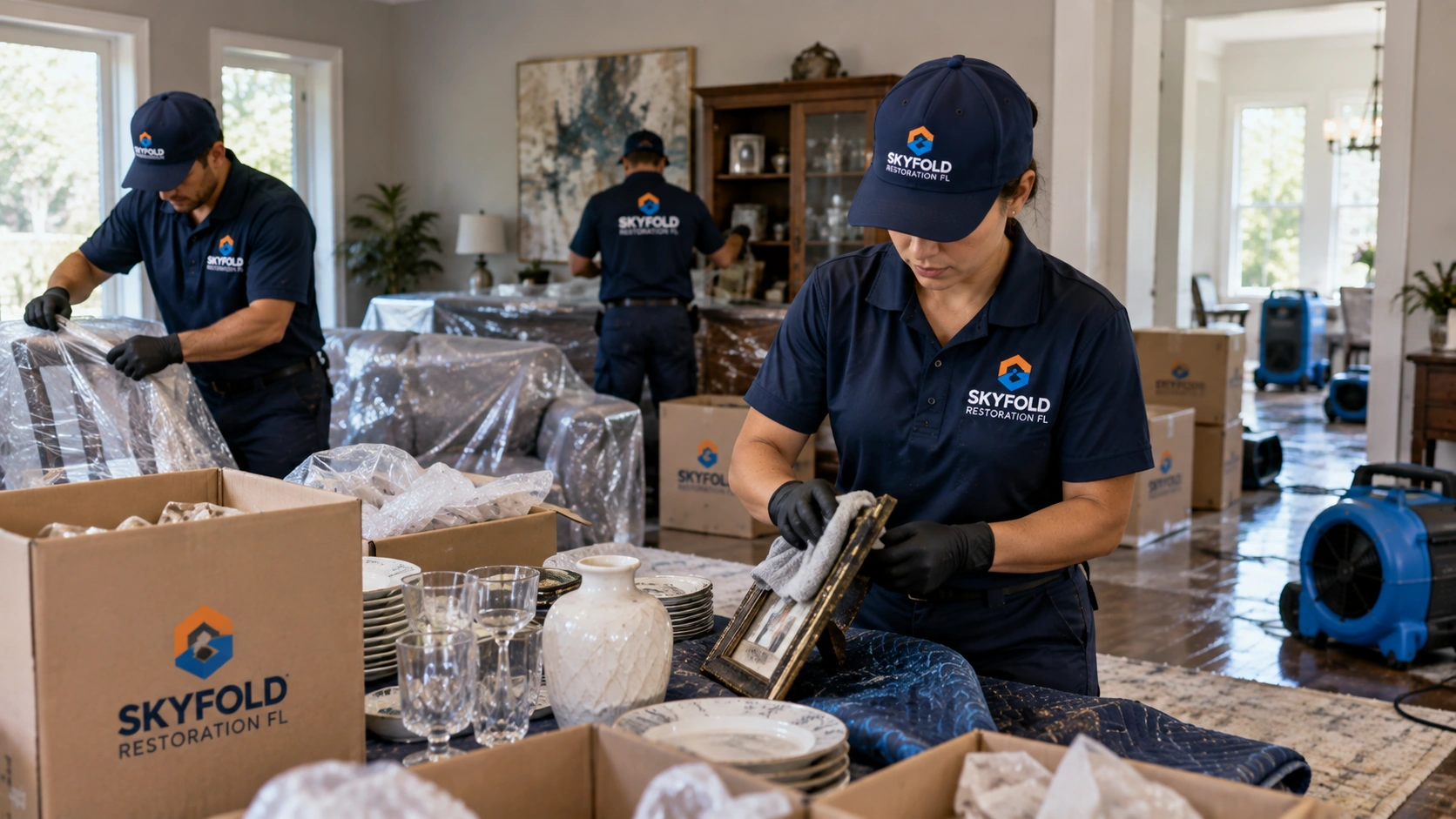
Protecting belongings is about limiting further loss, not doing the restoration yourself. Porous items such as upholstery, paper, books and soft furnishings can absorb water quickly, so move them only when the area is safe, and leave anything heavy, unstable or near contaminated water for professionals to handle.

Contents restoration technicians cleaning and packing household belongings after water damage
Contents are evaluated and packed out with care when a loss affects belongings.
Residential help

Water Damage Help for Florida Homes

Homes, condos, apartments, townhomes and rental properties can experience burst pipes, appliance leaks, roof leaks, AC leaks, flooding and sewage backups. The right response depends on where water entered, what it touched and how long moisture remained.

Homes & Townhomes

Watch for plumbing leaks, roof intrusion, appliance failures, HVAC drainage issues and localized flooding.

Condos & Apartments

Water may move between units or through shared assemblies, making source identification and affected-area assessment important.

Rental Properties

Owners and managers may need coordinated access, documentation and restoration planning when a tenant reports an active leak.

Commercial help

Water Damage Help for Florida Businesses

Offices, restaurants, retail spaces, warehouses, multifamily properties and other facilities may have additional concerns around business interruption, staff and customer safety, equipment, inventory, access and documentation.

Offices & Retail

Water can affect occupied areas, flooring, ceilings, equipment and contents while the business is operating.

Restaurants

Water and contamination events can involve work areas, storage, finishes and equipment zones that require controlled cleanup.

Warehouses & Facilities

Larger areas may involve more contents, access considerations and drying requirements.

Florida-specific help

Water Damage Help for Florida Property Owners

Florida water emergencies can come from everyday building systems as well as weather. Hurricanes and tropical storms can combine heavy rain, wind-driven water, flooding and roof damage. Heavy rainfall can overwhelm drainage paths or contribute to interior water intrusion. Inside buildings, air-conditioning systems produce condensate, so blocked drains, drain-pan overflow and other HVAC moisture problems can affect ceilings, walls and attic areas.

Property construction also changes the way water behaves. Condos and multifamily buildings may involve water movement between units or through shared assemblies. Slab-on-grade homes can have moisture affecting flooring and wall bases when water enters near the perimeter or below finishes. Coastal or lower-lying properties may face flooding and storm exposure that differs from inland properties.

The useful relationship is: Florida event → water intrusion or flooding → moisture/contamination considerations → extraction → drying → restoration. The exact response depends on the source, water category, materials, property type and extent of the loss.
Decision support

What Should I Do?

Use this quick decision aid to choose a safer next step. When conditions are unsafe or uncertain, do not continue into a hazardous area just to complete the checklist.

Is water still entering?

YES → Stop the source if safe, protect people, avoid hazards, and get appropriate help.

NO → Assess visible damage, think about hidden moisture, and determine whether extraction or drying is needed.

Is the water contaminated?

YES → Avoid contact and seek professional sewage or contaminated-water cleanup.

NO / UNKNOWN → Treat unknown water cautiously and get assessment when the event is significant.

Is there standing water?

YES → Only access the area when safe. Extraction may be needed.

Water inside walls/floors/ceilings → Professional assessment and structural drying may be needed.

Florida service area

Water Damage Help Across Florida

This page stays focused on emergency guidance rather than becoming a city directory. Use the Locations hub for the full geographic architecture and supported ZIP coverage.

South Florida
Central Florida
Tampa Bay
Southwest Florida
Northeast Florida
Northwest Florida
Quick answers

Water Damage Help: Frequently Asked Questions

What should I do immediately after discovering water damage?

Protect people and pets, stop the water source if safe, avoid electrical hazards, document visible damage, protect belongings when safe, and arrange appropriate assessment or restoration help when the loss is significant, hidden, contaminated or difficult to control.

Should I turn off the water?

If the source is a plumbing or appliance leak and you can safely use a normal shutoff, stopping the source can limit additional damage. Do not attempt unsafe plumbing or electrical work.

What if the water may have reached electrical systems?

Do not enter standing water where an electrical hazard may exist and do not operate electrical equipment in unsafe wet areas. Keep people away and use appropriate professional or electrical guidance.

What should I do after a burst pipe?

If safe, stop or isolate the water source, keep people away from hazardous areas, document the damage, and arrange water extraction and drying when needed. Plumbing repair and restoration of water-affected materials can be separate steps.

What should I do after a washing machine leak?

Stop the source safely, keep the area clear of electrical hazards, document the visible damage, and remove standing water only when safe. Check flooring, baseboards, cabinetry and nearby walls.

What should I do after a roof leak?

Protect people and avoid unsafe roof access. Document interior damage and arrange assessment of the water intrusion. Roof/source repair may be separate from mitigation and drying.

What should I do after a toilet overflow?

Determine whether the water is simply from the fixture or may involve a drain or sewer problem. Avoid unnecessary contact, keep children and pets away, and use professional contaminated-water cleanup when appropriate.

What should I do after sewage backs up?

Avoid contact with wastewater, keep people and pets away, and do not attempt risky cleanup. Sewage requires different handling and cleaning considerations than ordinary clean-water leaks.

Should I remove standing water myself?

Only use methods that are safe for the specific conditions. Do not use electrical equipment around unsafe standing water or enter contaminated or structurally hazardous areas. Significant or contaminated losses may require professional extraction.

How do I know if water is behind a wall?

Possible signs include staining, soft drywall, peeling finishes, recurring dampness or odor, and unexplained moisture. A professional assessment may use moisture meters or other detection methods.

How long does water damage take to dry?

There is no single guaranteed drying period. It depends on the amount of water, materials, humidity, temperature, airflow, dehumidification, contamination and extent of the loss.

Can water damage cause mold?

Prolonged moisture can increase the risk of mold growth, but not every water event causes mold. Prompt source control, extraction and drying can reduce how long materials remain damp.

What should I photograph for insurance?

When safe, photograph the apparent source, affected rooms, standing water, damaged materials and contents. Keep receipts, estimates, restoration records and other documentation that may explain the loss.

Does homeowners insurance cover water damage?

Coverage depends on the policy, cause of loss, exclusions, deductibles and other terms. Do not assume every water event is covered; review the policy and communicate with the insurer or adjuster.

What happens after professional water extraction?

Visible water removal is followed, when needed, by moisture assessment, structural drying, dehumidification, monitoring, cleaning or sanitization, and repairs or reconstruction.

When should I call a restoration company?

Professional assessment is especially relevant when there is extensive standing water, water inside walls or ceilings, subfloor moisture, contaminated water, flood or storm damage, repeated water intrusion, hidden moisture or significant property damage.

What should I do after hurricane flooding?

Put safety first, stay away from unsafe floodwater and electrical hazards, document damage when safe, and seek appropriate restoration help. Hurricane losses can combine flooding, wind-driven rain, roof damage and contamination concerns.

Is flood water contaminated?

Floodwater should be treated cautiously because its source and what it contacts may affect contamination. The exact water category depends on the conditions of the loss. Avoid unnecessary contact.

Do I need professional help for a small leak?

Not necessarily. A minor, controlled leak that is removed promptly and has not affected building materials may not require professional restoration. The need increases when water persists, reaches porous or concealed areas, or is contaminated.

Which Florida areas do you serve?

Skyfold Restoration is structured as a statewide service-area website. Use the Florida Locations hub for supported regions, cities and ZIP coverage: /locations/.

Our Location

Skyfold Restoration FL in Miami

If you need help with an active water loss, our team operates from Miami and covers the supported Florida service network.

Our business address is 2247 NW 3rd St, Miami, FL 33125. Coverage may extend across the supported Florida service network, and availability should be confirmed for the specific property location.

Emergency help

Need Water Damage Help Now?

If your property has significant standing water, hidden moisture, sewage contamination, flood damage, storm-related water intrusion or another substantial water loss, start with safety and then connect the problem to the appropriate restoration response.

Emergency HelpCall Now