Serving All of Florida – 24/7 Emergency Line[email protected](833) 606-6010
Skyfold Restoration FL
Water damage guide

What Is Structural Drying?

Structural drying is the controlled removal of moisture from a building's structure, walls, floors, ceilings, and framing, after water damage. It goes far beyond mopping up visible water: it targets the hidden moisture inside materials that causes mold, rot, and long-term damage. Here is how professionals do it and how they prove the job is done.

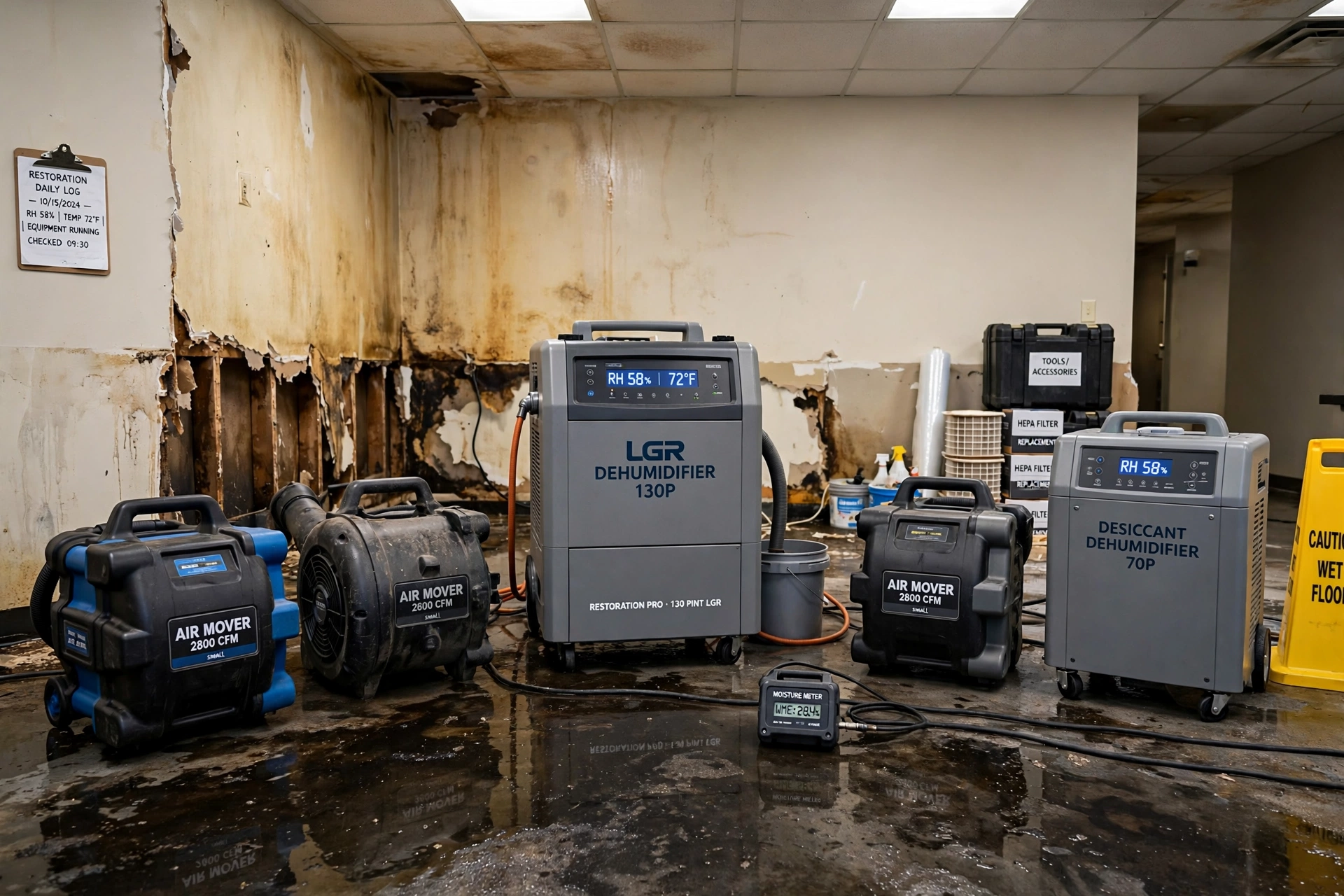
Professional structural drying equipment in a Florida home

Fast Answer

Structural drying uses air movers, dehumidifiers, and moisture meters to pull trapped water out of building materials and verify they return to a safe dryness level. It typically takes 3 to 5 days and is the phase that prevents mold growth, wood rot, and musty odors months later. Drying is complete when meter readings match the dry standard for each material, not when surfaces feel dry.

Why it matters

Why Drying Matters More Than Cleanup

What you can see is rarely the real problem.

When water enters a home, it does not sit politely on surfaces. Drywall wicks it upward like a sponge, wood framing absorbs it into fibers, concrete slabs pull it laterally, and insulation traps it against framing. Within hours, moisture migrates into places no towel or mop can reach. If that hidden moisture stays, three things follow: mold growth (often within days in Florida humidity), wood rot and fastener corrosion (over months), and persistent musty odors that no air freshener fixes.

Structural drying exists to reverse that migration in a controlled way. It is the difference between a home that looks fixed and a home that actually is fixed. This is also why drying is a distinct service from water extraction: extraction removes liquid water, while drying removes the moisture bound inside materials. Both are part of complete water damage restoration.

Equipment

The Equipment Behind Structural Drying

Each machine has a specific job in the drying system.

1

Air Movers

High-velocity fans that push dry air across wet surfaces. Moving air breaks the thin boundary layer of saturated air clinging to materials, which dramatically speeds evaporation. Technicians angle them to create airflow across walls and under cabinets, not just into the room.

2

Dehumidifiers

These pull the evaporated moisture out of the air so it does not simply re-condense on cool surfaces. In Florida, where outdoor humidity often exceeds 80 percent, refrigerant or desiccant dehumidifiers do the heavy lifting. Sizing matters: too small and drying stalls.

3

Air Scrubbers

HEPA-filtered units that capture airborne mold spores and dust stirred up during demolition and drying. They protect indoor air quality while the structure is open and materials are being handled.

4

Moisture Meters

Pin and pinless meters that read moisture content inside drywall, wood, and concrete. Daily readings tell technicians whether the drying plan is working or needs adjustment. These numbers, not touch or smell, define when drying is done.

5

Thermal Imaging Cameras

Infrared cameras reveal temperature differences that indicate hidden moisture behind walls and under floors. They guide precise demolition: only the wet sections come out, saving undamaged materials.

6

Injectidry and Wall Systems

Specialized panels and hoses that force dry air directly into wall cavities and under cabinets. These target the exact places where moisture hides in Florida's slab-on-grade construction.

Process

How Structural Drying Works, Step by Step

  1. Establish the dry standard. Technicians measure moisture in unaffected areas of the same materials to set the target. Every home is slightly different, so this baseline matters.
  2. Remove what cannot be saved. Saturated carpet pad, swollen MDF, and soaked insulation come out. Drying works on salvageable structure, not on materials that have lost integrity.
  3. Place the drying system. Air movers and dehumidifiers are positioned based on the moisture map, with the right balance for the cubic footage and material types.
  4. Monitor daily. Moisture readings are taken every 24 hours and logged. Equipment is repositioned as the drying front moves through materials.
  5. Verify and document. When all readings reach the dry standard, equipment is removed and the readings become part of your file. This documentation supports insurance claims and future home sales.

For the broader sequence this fits into, see our restoration process guide and our restoration timeline breakdown.

Florida challenges

Why Drying Is Harder in Florida

  • Ambient humidity: Drying works by moving moisture from wet materials into drier air. When Florida's outdoor air is nearly saturated, dehumidifiers must work overtime, and jobs take longer than the same loss would take in Arizona.
  • Slab construction: Concrete wicks water sideways under flooring and releases it slowly. Slab-edge drying is a Florida specialty that adds days to many jobs.
  • Closed-up homes: Snowbirds and vacation homes often sit sealed with the AC off, letting humidity bake moisture deeper into materials before anyone notices the leak.
  • Year-round mold pressure: With warmth and humidity constant, the margin for incomplete drying is essentially zero. This is why our mold growth guide stresses speed so strongly.
Consequences

What Happens If You Skip Proper Drying

The costs of inadequate drying arrive slowly, then all at once.

  • Mold inside walls: The most common outcome. Hidden mold spreads through wall cavities and HVAC systems, and remediation then requires the demolition that proper drying would have avoided.
  • Wood rot and structural weakening: Framing and subflooring that stay damp lose strength over months. By the time floors feel spongy, the repair is far bigger than drying would have been.
  • Flooring failures: Hardwood cups and buckles, tile grout crumbles, and laminate delaminates when moisture migrates up from below. Most flooring warranties exclude water damage, leaving the cost with the homeowner.
  • Odors that never leave: Musty smells come from microbial growth in damp materials. No cleaner or air freshener fixes the source; only removing the moisture does.
  • Resale problems: Florida buyers and inspectors look hard for moisture history. Undocumented water events with no drying records raise red flags and can kill deals.

Skipping drying to save money now is among the most expensive decisions a homeowner can make after water damage. The drying phase typically costs a fraction of the mold remediation or structural repair that follows inadequate drying.

FAQs

Structural Drying Questions

How long does structural drying take?

Typically 3 to 5 days for a standard residential job, longer for saturated masonry, dense hardwoods, or high-humidity conditions. Daily moisture readings determine the actual end date; be wary of anyone who promises a fixed duration before measuring.

Can I speed up drying by opening windows?

In Florida, usually not. Outdoor air is often more humid than the dried indoor air, so open windows can slow drying or even reverse it. The exception is a rare cool, dry winter day. Follow your technician's guidance on ventilation.

Why is the equipment so loud? Can I turn it off at night?

Air movers are loud by design; moving large volumes of air is the job. Turning equipment off, even overnight, lets moisture redistribute and can add a full day to the timeline. If noise is unbearable, ask about repositioning rather than shutting down.

How do I know the drying actually worked?

Ask for the moisture log: dated readings showing each material's progress from wet to the dry standard. Reputable companies provide this without being asked, and it becomes valuable documentation for insurance and resale.

Will my walls need to be cut open?

Only where moisture readings justify it. Thermal imaging and meters let technicians open precisely the wet sections, often just the bottom foot of drywall, rather than entire walls. Controlled demolition now prevents uncontrolled mold later.

Does homeowners insurance cover structural drying?

When the water event itself is covered, drying is part of the covered mitigation. Insurers expect prompt professional drying; delaying it can actually jeopardize coverage under your duty to mitigate. See our insurance coverage guide for details.

Related guides

Keep Reading

How Long Does Restoration Take?

Full timelines from first call to final repair.

Read guide

How Fast Does Mold Grow?

Why drying speed is a mold prevention strategy.

Read guide

Water Extraction Explained

The critical first step before drying begins.

Read guide

Wet Walls or Floors? Do Not Wait.

Hidden moisture does its worst damage silently. Call for professional structural drying with verified moisture readings, anywhere in Florida.

Call (833) 606-6010