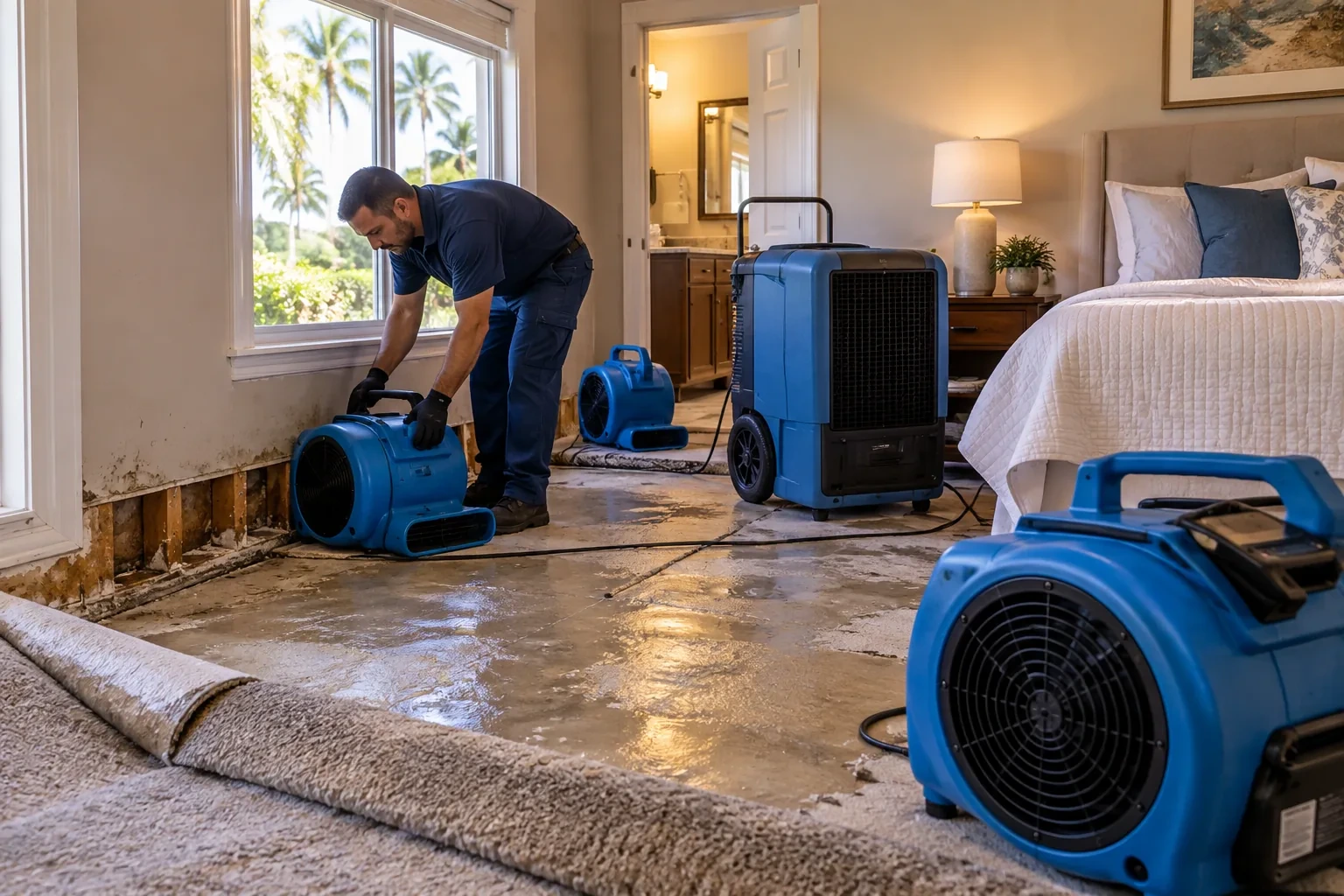
Can water damage dry on its own?
Surfaces may look dry within days, but moisture trapped in drywall, subflooring, and wall cavities can persist for weeks and feed mold growth. In Florida humidity, air-drying alone rarely reaches a safe moisture level. Professional drying with dehumidification and daily moisture readings is the reliable path. Our mold growth timeline explains what is at stake during the wait.
How do I know when drying is finished?
Drying is finished when moisture meters show each material has returned to its dry standard, not when it feels dry. Technicians compare readings against unaffected areas of the same material in your home. Ask to see the readings; a reputable company will show you the numbers.
Why does my neighbor's job take longer than mine?
Material differences dominate: tile over concrete dries far faster than carpet over pad, and a clean-water leak dries faster than a sewage backup. The extent of hidden moisture, found only with meters, often explains the gap between two similar-looking jobs.
Does insurance cover additional living expenses during restoration?
Many Florida homeowners policies include loss-of-use coverage that helps with hotel or rental costs if your home is uninhabitable during repairs. Check your policy's ALE limit and keep every receipt. Our insurance documentation service helps organize the paperwork adjusters ask for.
Can I stay in the home during restoration?
For small clean-water jobs, often yes. For sewage, widespread mold, or major demolition, temporary relocation is safer and usually faster because crews can work without scheduling around occupants. Your contractor should give you a straight answer based on the water category and affected areas.
What is the longest part of the process?
Usually the repair phase, not the drying. Drying is predictable once equipment is running; repairs depend on material availability, trade scheduling, and insurance approvals. Starting repair planning during the drying week is the best way to compress the total timeline.