
1
Moisture
The trigger. Wet drywall, damp carpet pad, or condensation inside wall cavities. Mold cannot grow on dry materials, which is why thorough structural drying is mold prevention.
Mold can begin growing within 24 to 48 hours after water damage, and Florida's warmth and humidity make that timeline even tighter. Mold does not need much: moisture, a food source like drywall or wood, and still air. This guide explains the growth timeline, the warning signs, and exactly how fast drying stops mold before it starts.
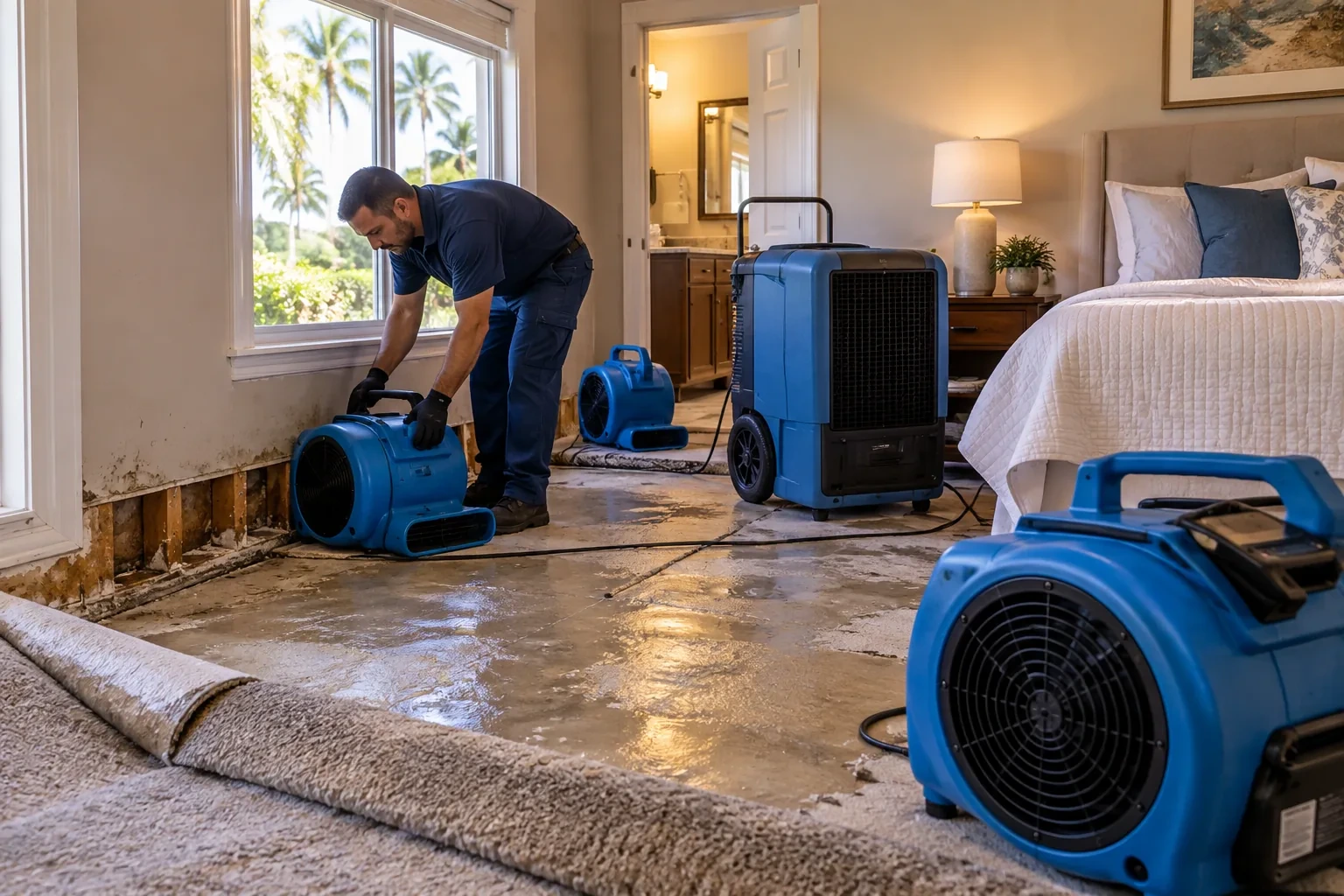
Mold can start growing in 24 to 48 hours on wet drywall, wood, or carpet in Florida conditions, and becomes visible within 3 to 7 days if moisture remains. The growth clock starts when materials get wet, not when you notice the leak. Professional structural drying within the first day or two is the most reliable way to prevent a mold problem from ever developing.
| Time since wetting | What is happening | What you can do |
|---|---|---|
| 0 to 24 hours | Spores land on wet surfaces and begin germinating; nothing visible yet | Extract water, start drying, remove soaked porous materials |
| 24 to 48 hours | Microscopic colonies establish on drywall, wood, and carpet backing | Professional drying equipment should already be running |
| 3 to 7 days | Visible spots or discoloration; musty odor develops | Containment and remediation needed, not just drying |
| 1 to 3 weeks | Colonies spread through wall cavities and HVAC; spores circulate | Professional mold remediation; possible temporary relocation |
| 1 month+ | Structural materials degrade; widespread contamination possible | Major remediation with demolition and rebuild |
These timeframes compress in Florida. A July leak in a closed-up home can hit the 48-hour colonization stage faster than the same leak would in a dry climate, because ambient humidity keeps materials from drying on their own. Vacation homes and snowbird properties deserve special attention: a small leak in an empty house with the AC off can run the entire mold timeline uninterrupted, and owners often discover the damage weeks later when it has progressed to the remediation stage. If you leave a Florida home empty for extended periods, have someone check it regularly or install water sensors that alert your phone. Our restoration timeline guide shows how fast professional response short-circuits this entire table.
Mold is not mysterious. It needs four things, and Florida homes supply all of them generously.
The trigger. Wet drywall, damp carpet pad, or condensation inside wall cavities. Mold cannot grow on dry materials, which is why thorough structural drying is mold prevention.
Drywall paper, wood framing, ceiling tiles, and dust are all food. Florida's wood-frame construction gives mold an all-you-can-eat buffet behind every wall.
Mold thrives between roughly 60 and 80 degrees, which describes Florida interiors nearly year-round. There is no cold season to slow it down.
Closed closets, wall cavities, and vacant homes provide the undisturbed conditions colonies need. Running HVAC and airflow disrupt this, which is one more reason drying equipment matters.
Spotted any of these? Our water damage signs resource covers hidden moisture clues room by room.
Every strategy comes back to one principle: remove the moisture fast. Mold is a moisture problem wearing a disguise; solve the water and you solve the mold.
When mold has already established, drying alone is not enough.
Remediation costs rise steeply with the affected area, which is why the economics always favor fast drying over later mold removal. Our cost guide breaks down what drives pricing.
Microscopic germination can begin within 24 hours on wet porous materials in warm conditions. Visible growth takes longer, usually several days. The practical takeaway is the same: the first day is when prevention works best and costs least. If you discover a leak that has been running overnight, treat the situation as urgent even if everything looks fine, because the mold clock started when the water did.
Bleach can discolor surface mold on nonporous materials, but it does not reach mold roots inside porous drywall or wood, and the water in bleach can feed regrowth. Porous materials with mold growth generally need removal, not surface treatment.
We cannot assess health risks; that is a medical question. What we can say is that any mold growth after water damage signals excess moisture that needs professional attention, and that disturbed mold releases spores throughout the home. Containment during remediation matters regardless of mold type.
Drying stops active growth by removing moisture, but it does not remove established colonies or their staining. Materials with visible growth typically need remediation: contained removal, HEPA filtration, and cleaning of surrounding areas.
Often up to a sublimit, commonly around $10,000 in Florida, when the mold resulted from a covered sudden water event. Mold from long-term neglect is excluded. Fast drying after the event is your best financial protection. See our insurance guide for details.
Moisture meters and thermal imaging locate damp areas where mold is likely, and air or surface sampling can confirm growth when needed. The moisture investigation usually matters more than the mold test: find and fix the water, and the mold problem becomes solvable.
The process that stops mold by removing hidden moisture.
Read guideTimelines from first call to final repair.
Read guideCatch hidden moisture before mold gets a foothold.
Read guideEvery hour of delay is an hour of mold growth in Florida conditions. Call for emergency drying, or find your city for local response.