
Water Damage Restoration Cost in Florida
Honest cost ranges by damage level and what drives the price.
Read guideFlorida homeowners insurance usually covers sudden and accidental water damage, like a burst pipe or a failed water heater, but typically excludes floodwater and slow leaks you should have caught. The difference between a paid claim and a denied one often comes down to the water's source and your documentation. Here is how coverage actually works in Florida.
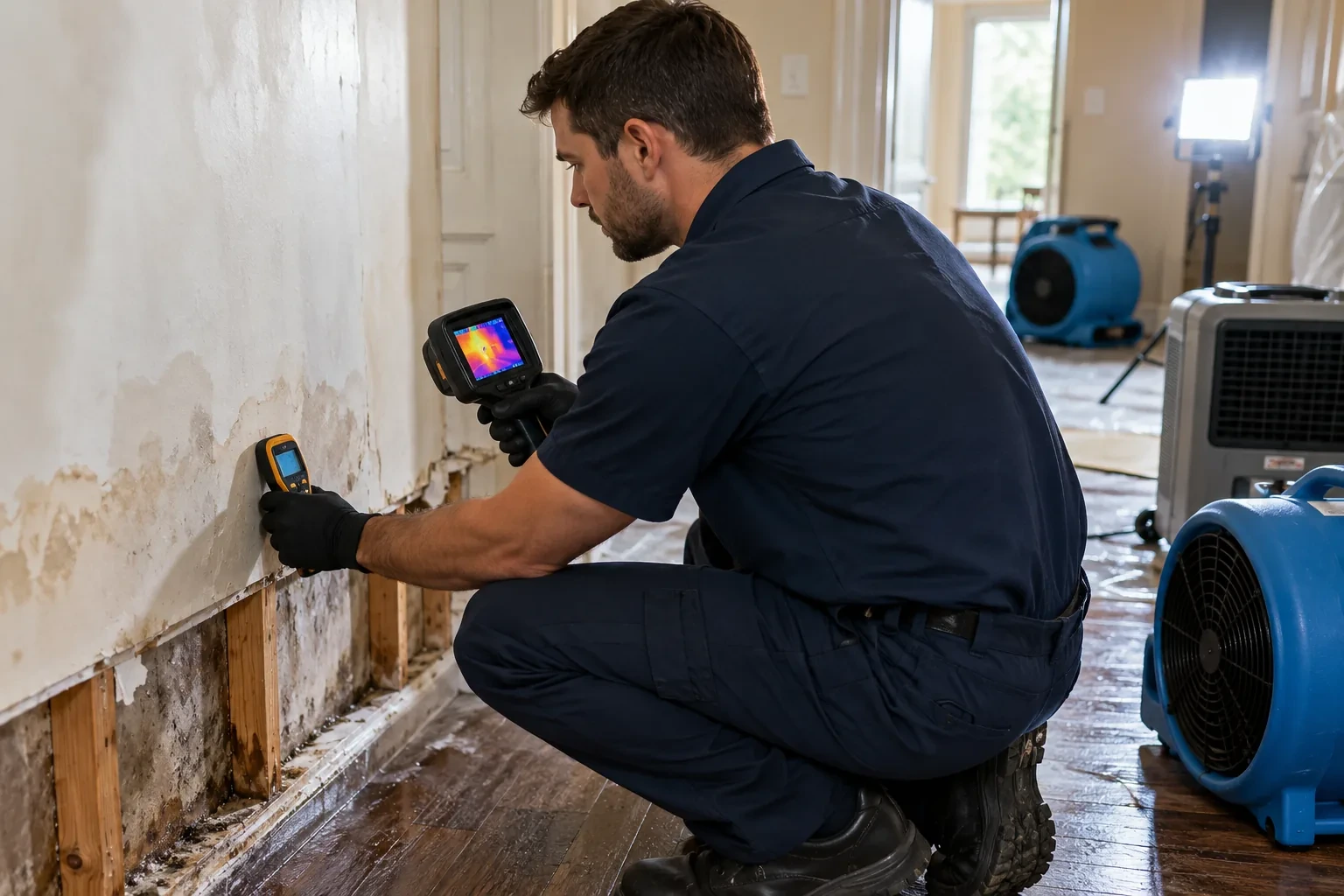
Yes, usually, if the damage was sudden and accidental. A burst pipe, an overflowing appliance, or rain entering through storm-damaged roofing is typically covered. No, usually not for rising floodwater (that needs separate flood insurance), gradual leaks from poor maintenance, or mold that grew because a leak sat for months. Florida policies follow this pattern closely, and documentation decides close calls.
Standard HO-3 policies, the most common type in Florida, cover water damage from these sudden sources.
The key phrase in every policy is sudden and accidental. If the water arrived all at once from a source you could not have prevented, you are usually on solid ground. For help organizing the proof, see our insurance documentation service.
These are the denials Florida homeowners encounter most.
| Exclusion | Why it is denied | What to do instead |
|---|---|---|
| Rising floodwater | Standard policies exclude floods; separate NFIP or private flood insurance is required | Carry flood insurance if you are in or near a flood zone |
| Gradual leaks | Seepage over weeks or months counts as maintenance failure | Fix drips early and keep repair receipts |
| Groundwater seepage | Water wicking up through slabs or foundations is excluded | Address drainage and grading proactively |
| Neglect | Known issues left unrepaired, like a visibly corroded pipe | Document maintenance and repairs |
| Mold from long-term moisture | Mold after a covered sudden event may be covered; mold from neglect usually is not | Dry water damage fast; see our mold timeline guide |
Confused about flood versus other water damage? Our water damage vs. flood damage guide explains the distinction insurers use.
Florida's market has quirks that change how claims play out.
Do these in order and you will be in the strongest possible position.
Wondering what the work itself costs? See our Florida restoration cost guide for honest ranges.
A denial letter is not always the final word.
The strongest appeal is built on the documentation you collected on day one: photos, readings, invoices, and a clear timeline. That is why we treat insurance documentation as part of the restoration job, not an afterthought.
No. Standard homeowners policies exclude rising floodwater, including storm surge. You need a separate flood policy through the NFIP or a private carrier. After major hurricanes, uninsured flood losses are the most common financial catastrophe Florida homeowners face.
Usually not. Insurers distinguish sudden bursts (covered) from seepage over time (maintenance exclusion). If you can show the leak started suddenly, for example a plumber's report dating the failure, your position improves dramatically.
Sometimes, within limits. Mold resulting from a covered sudden event is often covered up to a policy sublimit, commonly around $10,000 in Florida. Mold from long-term neglect is excluded. Fast professional drying after any water event is the best way to stay under the cap.
Weigh the repair cost against your deductible and the risk of a claims-history surcharge. For damage barely above your deductible, many homeowners pay out of pocket. For anything involving multiple rooms, structural drying, or mold risk, filing usually makes sense. A contractor's written estimate helps you decide.
Delay can hurt you two ways: the policy's duty to mitigate, and mold growth that the insurer attributes to neglect rather than the original event. Call for water extraction immediately and document the timeline.
Get an independent written scope from a restoration contractor and compare it line by line. You can submit a supplement with documentation for missed items. Florida's Department of Financial Services also offers free mediation for disputed property claims.
Honest cost ranges by damage level and what drives the price.
Read guideThe distinction insurers use, and why it decides claims.
Read guidePhase-by-phase timelines for Florida water damage jobs.
Read guideMoisture readings, photo logs, and written scopes are what adjusters ask for. We document everything from day one. Find your city in our Florida city directory or call now.