
1
Water Category
Clean water (Category 1) is cheapest to handle. Gray water costs more due to cleaning requirements. Black water (Category 3, sewage or flood) is most expensive because porous materials must be removed and disposed of.
Water damage restoration in Florida typically ranges from a few hundred dollars for minor cleanups to tens of thousands for major flooding, with most residential jobs falling somewhere in between. The final number depends on the water category, the affected area, how fast you responded, and what needs rebuilding. This guide gives you honest ranges, explains what drives each cost, and shows how to avoid overpaying.
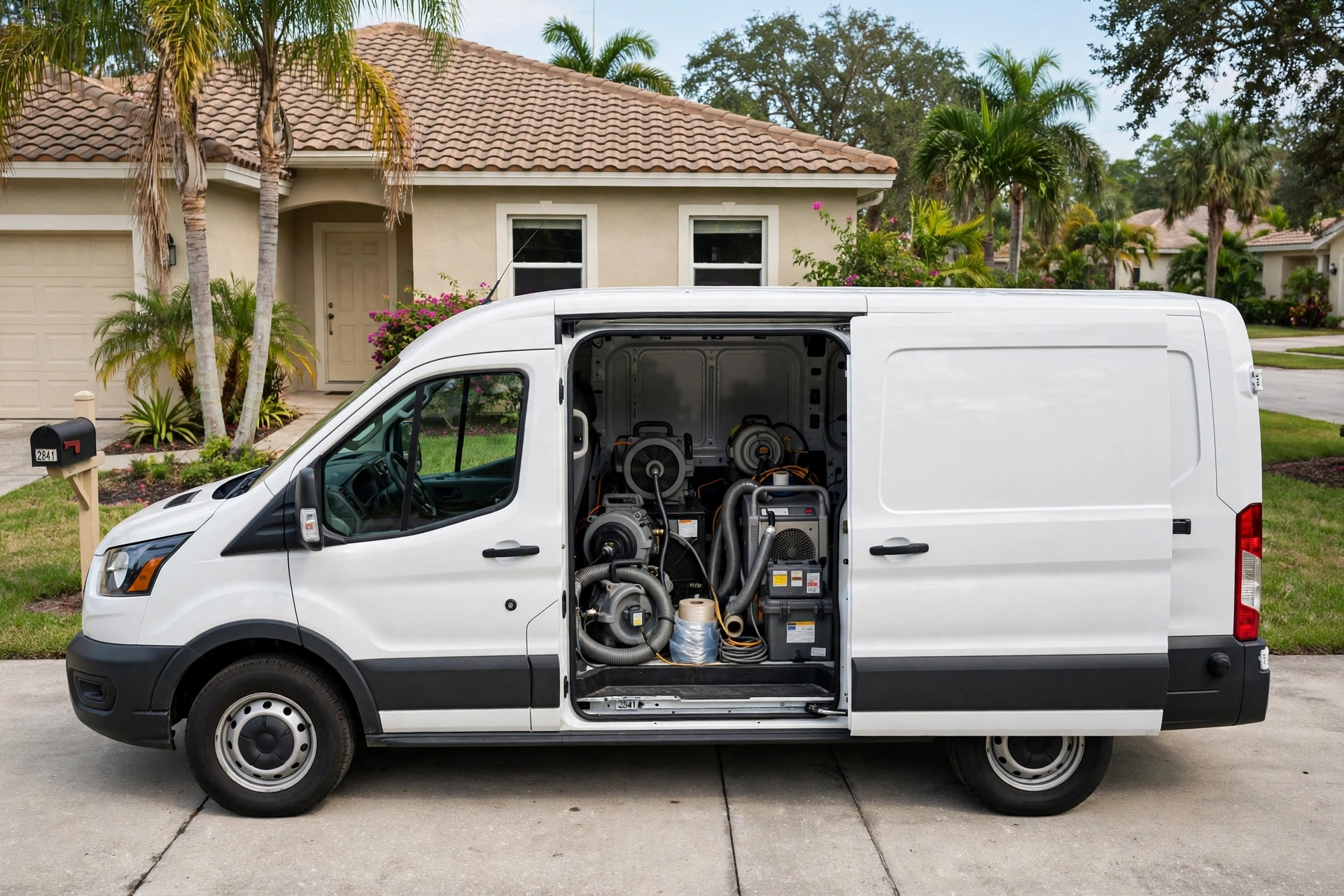
Florida homeowners typically pay $1,000 to $4,000 for moderate water damage restoration (extraction, drying, minor repairs) and $5,000 to $15,000+ for major damage involving multiple rooms, contaminated water, or mold. Small cleanups start around $500; whole-home flooding can exceed $20,000. These are honest market ranges, not quotes: your cost depends on the factors below. Get an on-site assessment for a real number, and be wary of anyone quoting a firm price sight unseen.
| Damage level | Typical range | What it usually includes |
|---|---|---|
| Minor (Class 1) | $500 to $1,500 | Small area, clean water, extraction and drying, minimal repair |
| Moderate (Class 2) | $1,500 to $4,000 | Whole room, carpet and pad removal, several days of drying, drywall patches |
| Major (Class 3) | $4,000 to $10,000 | Multiple rooms, ceiling involvement, significant demolition and rebuild |
| Severe (Class 4 / black water) | $10,000 to $20,000+ | Sewage or flooding, extensive removal, mold remediation, full rebuild of areas |
These ranges cover the restoration work itself. High-end finishes, custom cabinetry, and extensive mold remediation push costs higher. Emergency after-hours response may add a premium. For context on what the work involves, see our restoration timeline guide.
Clean water (Category 1) is cheapest to handle. Gray water costs more due to cleaning requirements. Black water (Category 3, sewage or flood) is most expensive because porous materials must be removed and disposed of.
Square footage matters, but so do materials. Tile over concrete dries cheaply; hardwood, carpet, and multi-layer assemblies cost more to dry or replace.
Same-day response limits the spread and often avoids demolition. Every day of delay grows the affected area, adds mold risk, and raises the bill. Speed is literally money.
If mold has established, remediation with containment and HEPA filtration adds significant cost. This is the most expensive consequence of slow response.
Removing and replacing drywall, flooring, and trim is where costs compound. Insurance usually covers the rebuild of covered losses, but upgrades beyond like-kind come out of pocket.
Second-floor or attic damage, tight crawlspaces, and condos with HOA coordination requirements all add labor time compared to a ground-floor room with easy access.
For covered losses, your out-of-pocket is usually the deductible plus any upgrades.
When a sudden water event is covered, the insurer pays reasonable restoration costs minus your deductible. Florida hurricane deductibles run higher than standard ones, so know which applies before storm season arrives. The adjuster and contractor negotiate scope; your job is documentation and choosing a contractor who communicates with the carrier. For non-covered events (long-term leaks, flood without flood insurance, sewer backup without endorsement), the full cost is yours, which makes multiple quotes and phased work more important. Either way, insurance documentation support protects your position.
Honest contractors share these traits; their opposites are warnings.
Most residential jobs fall between $1,000 and $5,000, with the middle of that range covering a typical single-room event with professional drying and minor repairs. Averages mislead, though: your water category, materials, and response time move the number more than any statewide average does. Treat averages as orientation, not as estimates.
Scope differences explain most of it. One quote includes full drying verification and rebuild; another covers extraction only. Equipment quality, crew experience, documentation thoroughness, and emergency availability also differ. Compare line items, not bottom lines.
For a tiny clean-water spill caught immediately, DIY can work. For anything involving soaked drywall, subflooring, or more than a day of wetness, DIY usually costs more in the end through missed hidden moisture, subsequent mold, and repairs that professionals would have avoided. Renting proper dehumidification narrows the gap but rarely closes it.
For covered perils, insurers pay reasonable costs minus your deductible, typically at like-kind replacement value. They do not pay for upgrades, pre-existing damage, or the cost of fixing the source itself (like replacing the failed water heater). Review your policy before you need it.
Mold remediation commonly adds thousands to a project, scaling with the affected area and containment requirements. Small contained areas cost far less than whole-room or HVAC-involved remediation. Fast drying after the water event is the cheapest mold remediation there is: prevention.
For out-of-pocket work, yes, at least two or three. For insurance claims, focus less on price shopping and more on choosing a contractor with strong documentation practices and carrier experience. The insurer sets the payable rates; your contractor's job is justifying the scope with measurements, photos, and clear line items.
Timelines that explain labor costs.
Read guideFlorida coverage rules and deductibles.
Read guideThe costliest consequence of slow response.
Read guideNo firm prices sight unseen, just a real inspection with moisture readings. Find your city or call now.