Core service 1
Water Damage Restoration in Copeland
- Source
- Assessment
- Extraction
- Drying
- Monitoring
- Cleaning / Restoration
Buildings in Copeland sit low and often close to tidal water. That makes wind-driven rain, surge and even ordinary heavy showers capable of putting water inside, and drying is complicated by humidity that rarely drops. Conditions are similar in nearby Ochopee and Everglades City, though distance from the water, elevation and building age can make a real difference from one block to the next in Copeland.
Along Southwest Florida's Gulf coast the wet season runs through the summer months, and heavy rain, tides and canals combine to slow drainage.
The type of building changes the response. In Copeland, single-family homes tend to be affected differently from vacation rentals, and marinas add their own complications. Construction type, age, shared systems and occupancy all influence how water moves and how drying should be set up.
Whether the loss is small or large, the logic is the same in Copeland: source, assessment, extraction, drying, monitoring, then cleaning and restoration. Each step depends on the one before it. Extraction without assessment can miss wet materials, and repairs without verified drying can hide damp framing behind fresh paint. Documenting readings along the way also gives the property owner and insurer a record of how the structure responded.
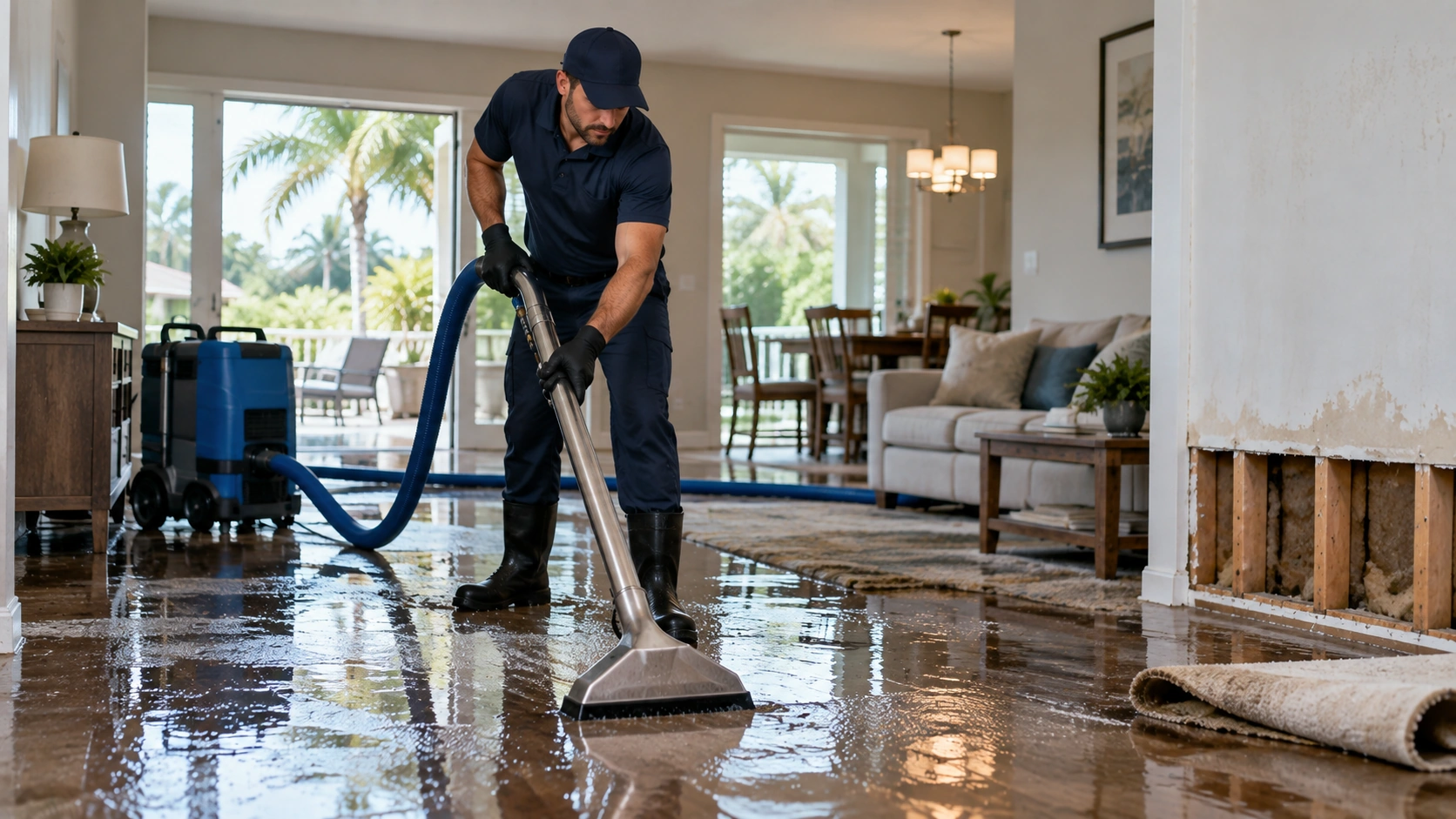
High humidity and low, wet ground make drying in Copeland a matter of patience and measurement. Salt or silt residue may also need to be cleaned before materials are declared dry. Extraction handles the bulk water, but structural drying deals with the moisture inside materials. Air movers and dehumidifiers are usually run together, and the equipment is adjusted as readings change. Drying targets are based on the materials involved, not on how dry a surface feels, and some materials, such as saturated insulation or damaged padding, may be removed rather than dried in place.
The condition of the water matters as much as the amount. Water from a broken pipe is usually cleaner than water from a storm drain, a flooded yard or a sewer line. When water is contaminated, porous materials such as carpet, padding and drywall may need to be removed, and surfaces need appropriate cleaning. In Copeland, sewage cleanup and flood restoration are treated as their own pathways for that reason.
For a house or townhome in Copeland, the work usually focuses on kitchens, bathrooms, laundry rooms, flooring and ceilings, and on protecting belongings. For single-family homes and vacation rentals, it may also involve coordination with property managers, associations or tenants. Businesses, from marinas and waterfront businesses and restaurants and retail, add questions about downtime, inventory, records and reopening.
The first hours matter after a water loss in Copeland. Stop the source when it is safe, keep people away from hazards, take photos before anything is moved and request help with the assessment. The sooner wet materials are identified, the more likely it is that they can be dried rather than replaced.