Core service 1
Water Damage Restoration in Naples
- Source
- Assessment
- Extraction
- Drying
- Monitoring
- Cleaning / Restoration
In Naples, water damage starts in many places at once: a supply line under a sink, a roof that lets in wind-driven rain, an air-conditioning drain line or a storm that pushes water against doors and low openings. Because slab-on-grade construction is common, plumbing often runs through walls and ceilings, so a small failure can spread before it is noticed. Owners in Bonita Springs, Marco Island and Goodland face a similar mix of causes, but details such as ground elevation, drainage and construction age can change the outcome from one Naples address to another.
Southwest Florida's low, canal-laced terrain drains slowly, so summer downpours and storm surge can leave water standing longer than expected.
Every property in Naples has its own moisture story. vacation rentals and hotels differ in layout, materials and how quickly a problem is noticed, and condominiums bring still other concerns. A good assessment looks at how the building is put together as well as at what is visibly wet.
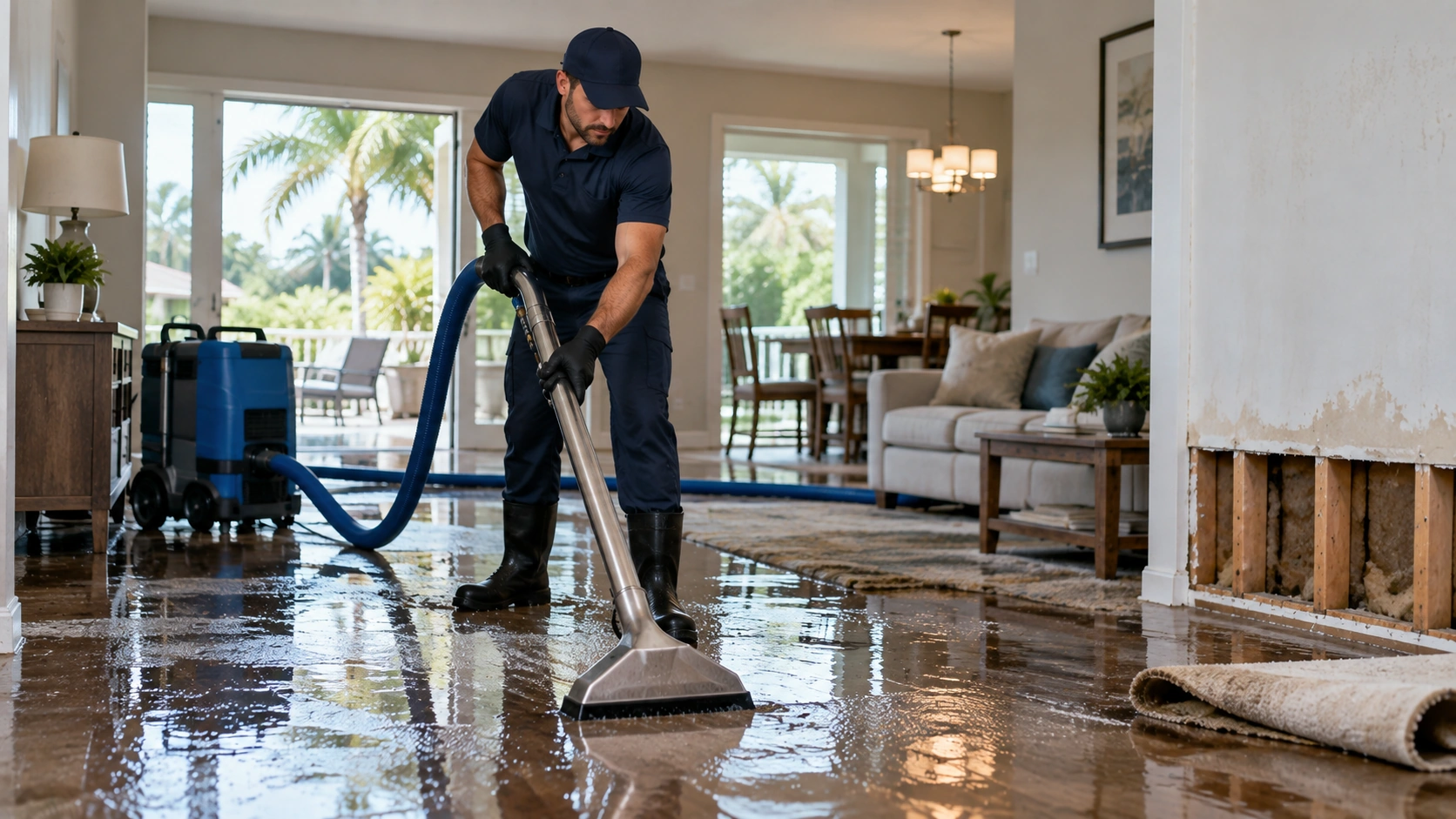
A restoration project in Naples usually follows a clear sequence. First the source is identified and stopped or isolated. Next comes an assessment, in which moisture meters and visual inspection are used to find where water has traveled. Standing water is then extracted, and structural drying begins with airflow and dehumidification. Moisture readings are taken repeatedly to monitor progress, and once materials return to normal levels the work moves on to cleaning, restoration and, where needed, repairs. The order matters, because skipping ahead to repairs before materials are dry can trap moisture behind new finishes.
Salt air and constant humidity mean a structure in Naples rarely dries on its own; controlled dehumidification and airflow do the real work, and readings need to be checked against a dry standard, not judged by touch. It helps to separate extraction from drying. Extraction pulls out standing and pooled water; structural drying and dehumidification remove what is left inside walls, floors and other materials. Doing both, and measuring the results, is what keeps hidden moisture from becoming a secondary problem.
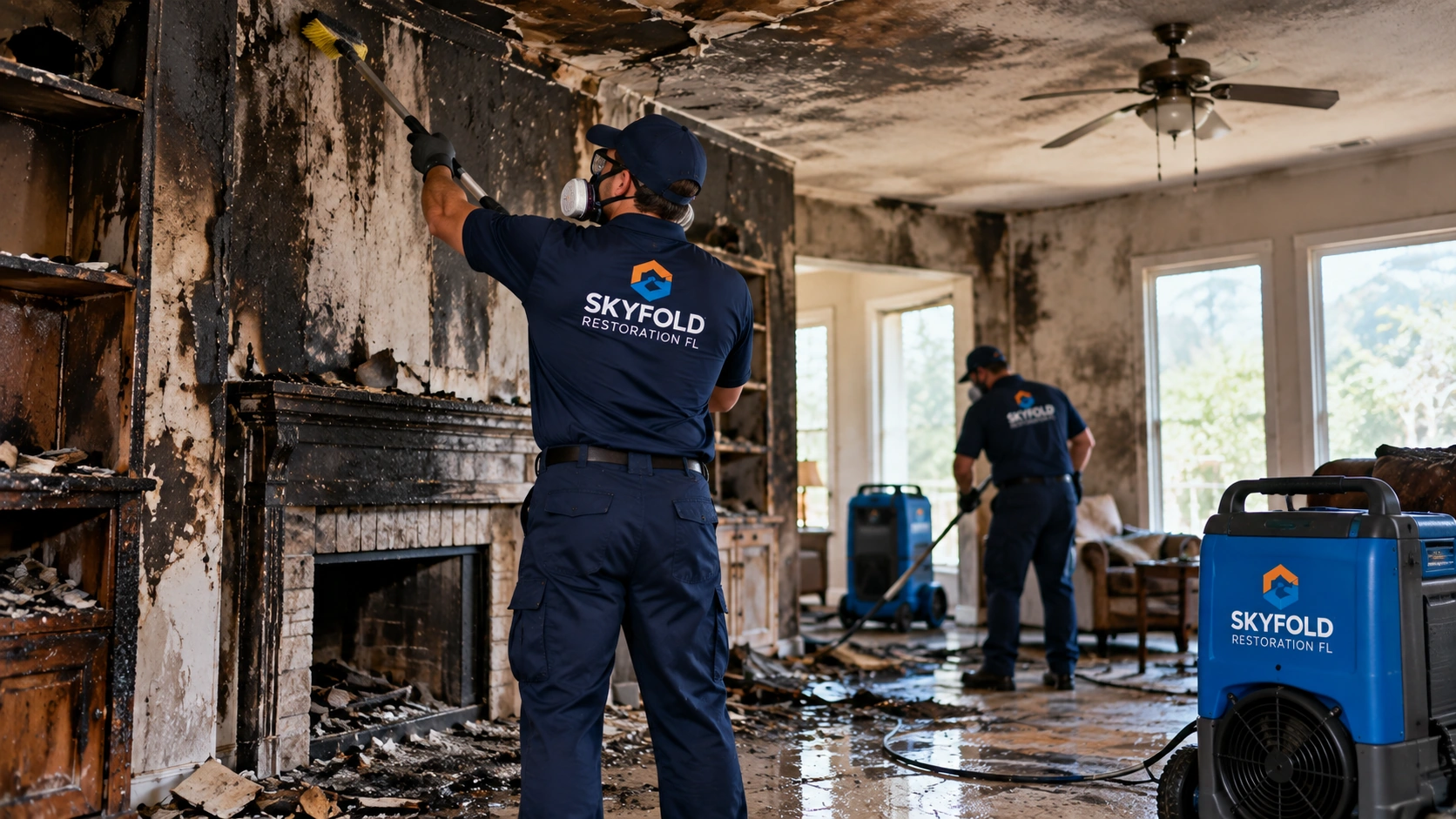
The condition of the water matters as much as the amount. Water from a broken pipe is usually cleaner than water from a storm drain, a flooded yard or a sewer line. When water is contaminated, porous materials such as carpet, padding and drywall may need to be removed, and surfaces need appropriate cleaning. In Naples, sewage cleanup and flood restoration are treated as their own pathways for that reason.
Residential losses in Naples often center on bedrooms, kitchens, bathrooms and flooring, while commercial losses involve tenant spaces, inventory, equipment and keeping the business running. Because the property mix here includes vacation rentals, hotels and condominiums, scope and coordination change from one project to the next.
When water has entered a property in Naples, avoid guessing whether the damage is 'minor.' Hidden moisture is common, and a quick assessment with moisture detection can tell you what is wet, what is not and what should happen next. Documenting the scene with dated photos and notes helps later with insurance and repair decisions.