Core service 1
Water Damage Restoration in Everglades City
- Source
- Assessment
- Extraction
- Drying
- Monitoring
- Cleaning / Restoration
In Everglades City, water damage often begins outdoors and moves in: storm tides, heavy rain and standing water around slab-level buildings. Salt water, mud and debris accompany many of these losses, which is why cleaning and drying are handled together. Conditions are similar in nearby Chokoloskee and Copeland, though distance from the water, elevation and building age can make a real difference from one block to the next in Everglades City.
Southwest Florida's low, canal-laced terrain drains slowly, so summer downpours and storm surge can leave water standing longer than expected.
The type of building changes the response. In Everglades City, single-family homes tend to be affected differently from vacation rentals, and marinas add their own complications. Construction type, age, shared systems and occupancy all influence how water moves and how drying should be set up.
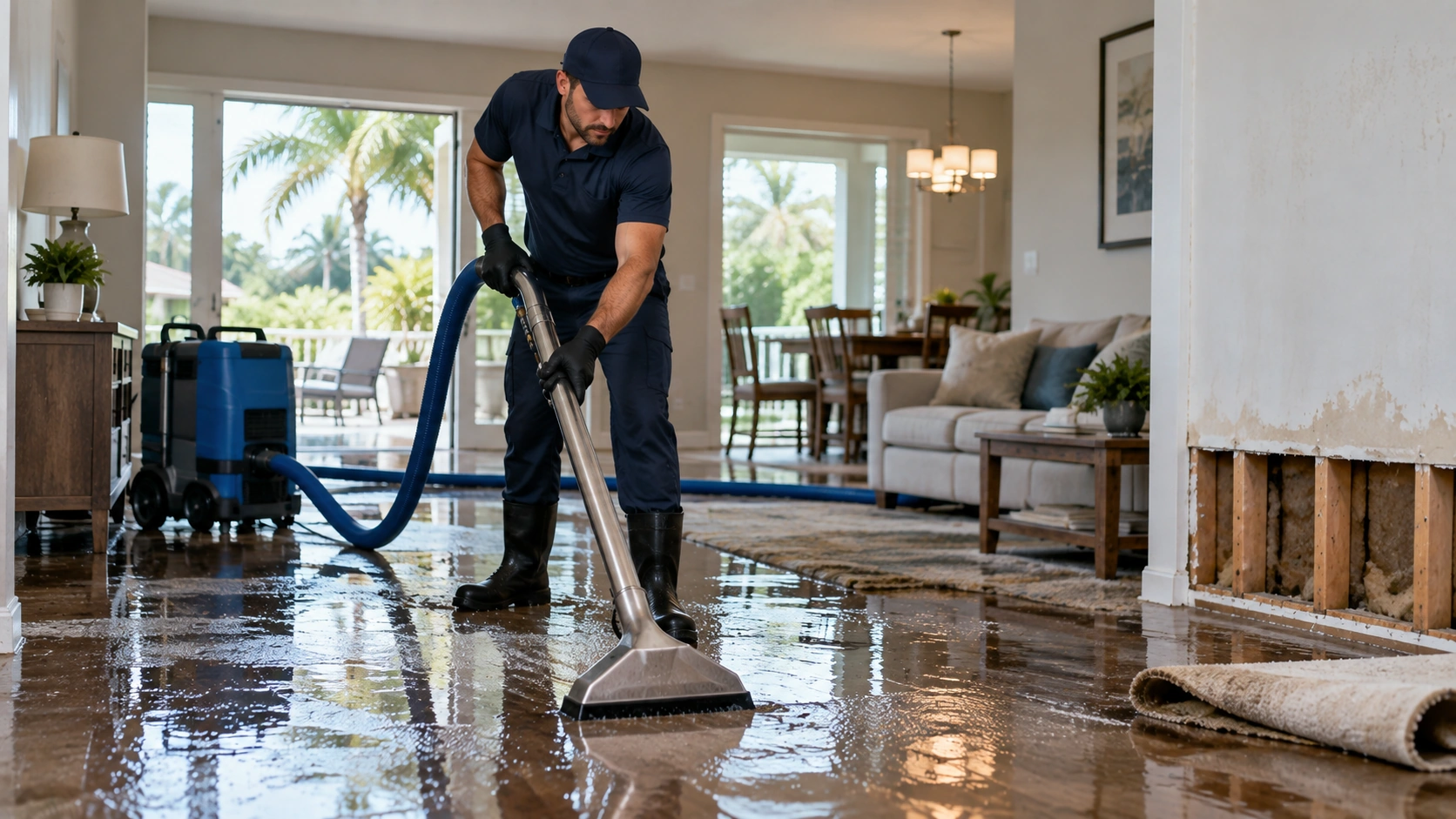
A restoration project in Everglades City usually follows a clear sequence. First the source is identified and stopped or isolated. Next comes an assessment, in which moisture meters and visual inspection are used to find where water has traveled. Standing water is then extracted, and structural drying begins with airflow and dehumidification. Moisture readings are taken repeatedly to monitor progress, and once materials return to normal levels the work moves on to cleaning, restoration and, where needed, repairs. The order matters, because skipping ahead to repairs before materials are dry can trap moisture behind new finishes.
High humidity and low, wet ground make drying in Everglades City a matter of patience and measurement. Salt or silt residue may also need to be cleaned before materials are declared dry. Extraction handles the bulk water, but structural drying deals with the moisture inside materials. Air movers and dehumidifiers are usually run together, and the equipment is adjusted as readings change. Drying targets are based on the materials involved, not on how dry a surface feels, and some materials, such as saturated insulation or damaged padding, may be removed rather than dried in place.
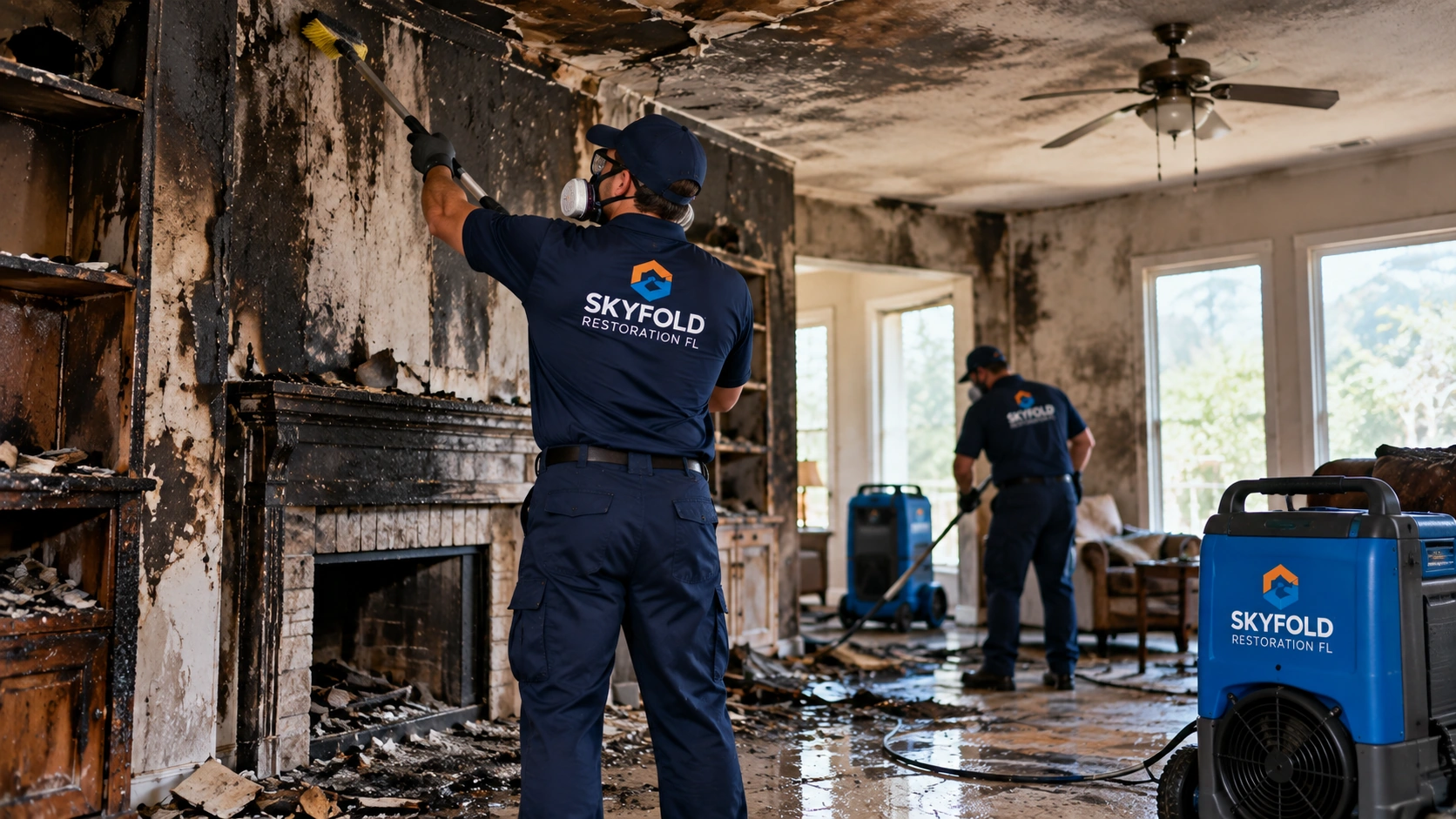
Restoration teams generally sort water into clean, gray and black categories, and the category can worsen with time. In Everglades City, that means a supply-line leak, a rain-driven roof leak, a backed-up drain and a flooded street each lead to a different plan. Sewage cleanup and flood restoration are separate service pathways because contamination changes safety, cleaning and disposal decisions.
Residential losses in Everglades City often center on bedrooms, kitchens, bathrooms and flooring, while commercial losses involve tenant spaces, inventory, equipment and keeping the business running. Because the property mix here includes single-family homes, vacation rentals and marinas, scope and coordination change from one project to the next.
If you are dealing with water in Everglades City, call as soon as you can safely do so. Shut off the water source if it is safe, avoid electrical hazards, photograph the damage and move valuables out of the wet area. Do not wait for surfaces to look dry, because moisture in walls and floors often remains long after the visible signs fade.