
!
Assignment of Benefits Pressure
Anyone pushing you to sign over your insurance claim rights on the first visit. Florida's AOB abuse history is exactly why this pressure exists. Keep control of your claim.
The company you choose after water damage affects your home's recovery, your insurance claim, and your wallet. Florida's storm-driven market attracts both excellent local contractors and opportunistic storm chasers, so knowing how to tell them apart matters. This guide covers licensing, the questions that reveal competence, and the red flags that should send you looking elsewhere.
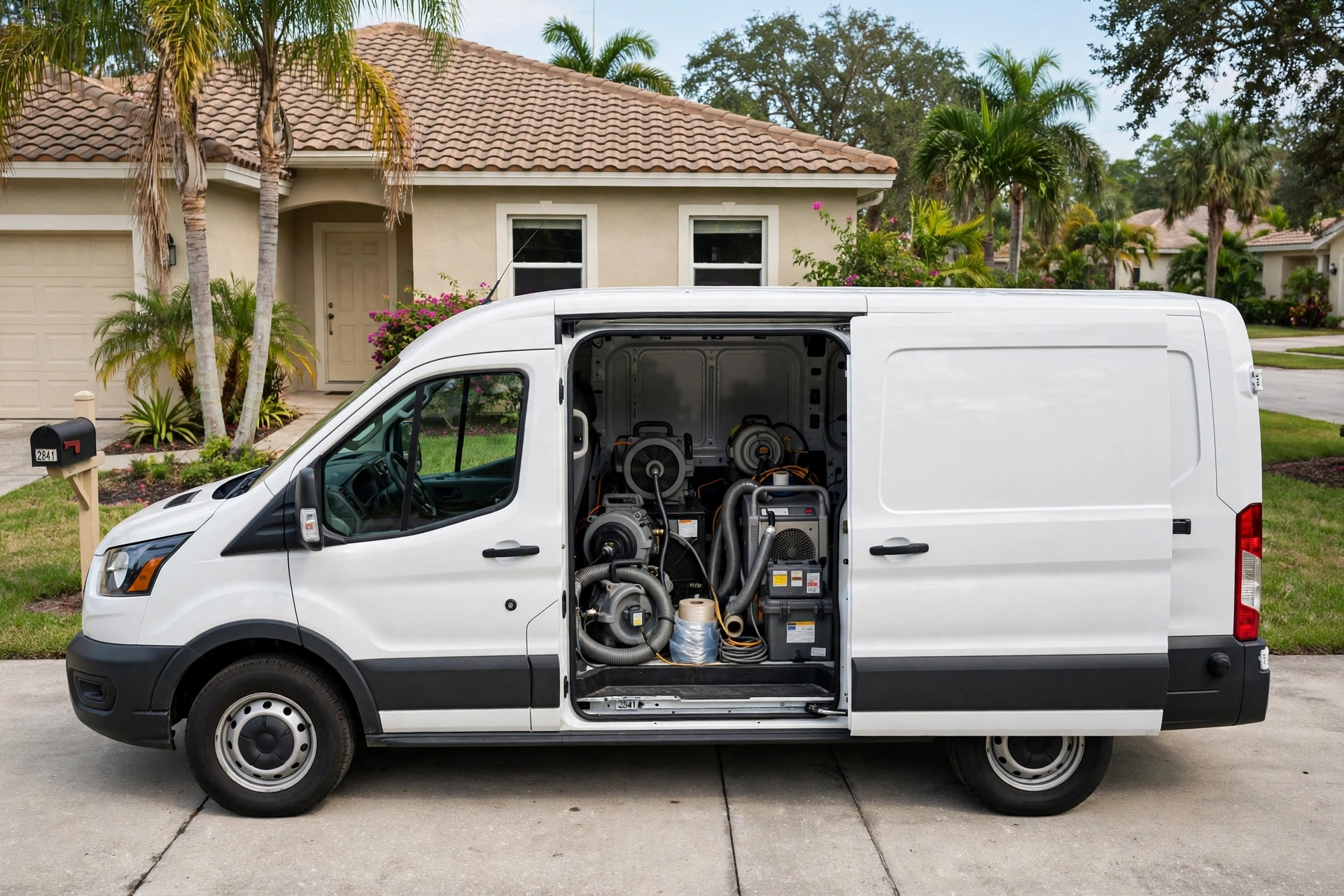
Choose a Florida water damage company that is licensed and insured, offers true 24/7 emergency response, provides on-site assessments with moisture readings, gives line-item estimates, has verifiable local presence, and documents thoroughly for insurance. Avoid anyone demanding full upfront payment, pushing assignment of benefits, or quoting firm prices without inspecting. Ask the questions below before you sign anything.
Verify before you hire, not after. Five minutes on the state portal beats months of regret.
Anyone pushing you to sign over your insurance claim rights on the first visit. Florida's AOB abuse history is exactly why this pressure exists. Keep control of your claim.
PO boxes, no address at all, or an address that turns out to be a vacant lot. Local accountability requires a local location.
Demands for cash or complete payment before work begins. Standard practice is phased payments tied to completed work.
Firm pricing without an on-site moisture inspection. Real scope requires real measurements.
Out-of-state plates, temporary signage, high-pressure door knocking after hurricanes, and no verifiable local job history.
No contractor can guarantee what your insurer will approve. Promises otherwise are either dishonest or a sign they plan to inflate the claim.
Do not compare bottom lines. Compare these instead.
| Factor | What good looks like |
|---|---|
| Assessment | On-site, with moisture meters and thermal imaging, findings explained to you |
| Estimate | Line-item, in writing, with scope tied to readings |
| Equipment | Commercial dehumidifiers and air movers sized to the job, monitored daily |
| Documentation | Photos, readings log, and reports formatted for insurance adjusters |
| Communication | Named contact, daily updates during drying, clear next steps |
| Rebuild capability | Can handle repairs after drying, or coordinates honestly with your chosen contractor |
Price matters, but the cheapest bid with the thinnest scope usually costs most in the end. Our cost guide explains how to read estimates critically.
The right choice keeps paying off during the job. Expect this.
If any of this is missing, raise it early. Good companies correct course; bad ones get defensive. The distinction is usually obvious within the first two days.
You are not required to. Preferred vendor programs can offer convenience and pre-negotiated rates, but you have the right to choose your own contractor in Florida. Choose based on competence and fit, not just the insurer's list.
For active water damage, same-day response is the standard you should expect, with arrival typically within a few hours in metro areas. If a company cannot commit to a response window, keep calling. Every hour matters for mold prevention.
Not necessarily. National franchises offer standardized processes; established local companies offer accountability and community reputation. What matters is the specific crew, their training, and their documentation practices, not the logo on the van.
Review the contract's cancellation terms immediately. Florida law provides rescission rights in certain door-to-door sales situations. If you signed an assignment of benefits, consult an attorney promptly, as AOB contracts can be difficult to unwind.
Not necessarily. Many restoration companies handle both mitigation and repairs, which simplifies coordination and insurance documentation. If you prefer your own remodeler for the rebuild, a good mitigation company will dry, document, and hand off cleanly.
Use the Florida Department of Business and Professional Regulation's online license search. Verify the license is current, covers the work type, and check for complaints or disciplinary actions. Legitimate contractors expect this and provide their number willingly.
Honest ranges and how to read estimates.
Read guideFlorida coverage rules before you file.
Read guideWhat to expect from first call to finish.
Read guideCall for an on-site assessment with real moisture readings, or find your city.