Core service 1
Water Damage Restoration in Brandon
- Source
- Assessment
- Extraction
- Drying
- Monitoring
- Cleaning / Restoration
In Brandon, most water losses begin inside the building: a supply line, water heater, washing machine hose, roof leak or air-conditioning condensate line. Because Florida homes are usually built on concrete slabs with utilities in walls and ceilings, leaks often stay hidden until stains, odors or soft flooring appear. Conditions are similar in nearby Mango and Seffner, though distance from the water, elevation and building age can make a real difference from one block to the next in Brandon.
The Tampa Bay area's combination of bay, rivers and flat terrain means heavy rain and storm tides both play a part in local flooding.
Every property in Brandon has its own moisture story. condominiums and offices differ in layout, materials and how quickly a problem is noticed, and hotels bring still other concerns. A good assessment looks at how the building is put together as well as at what is visibly wet.
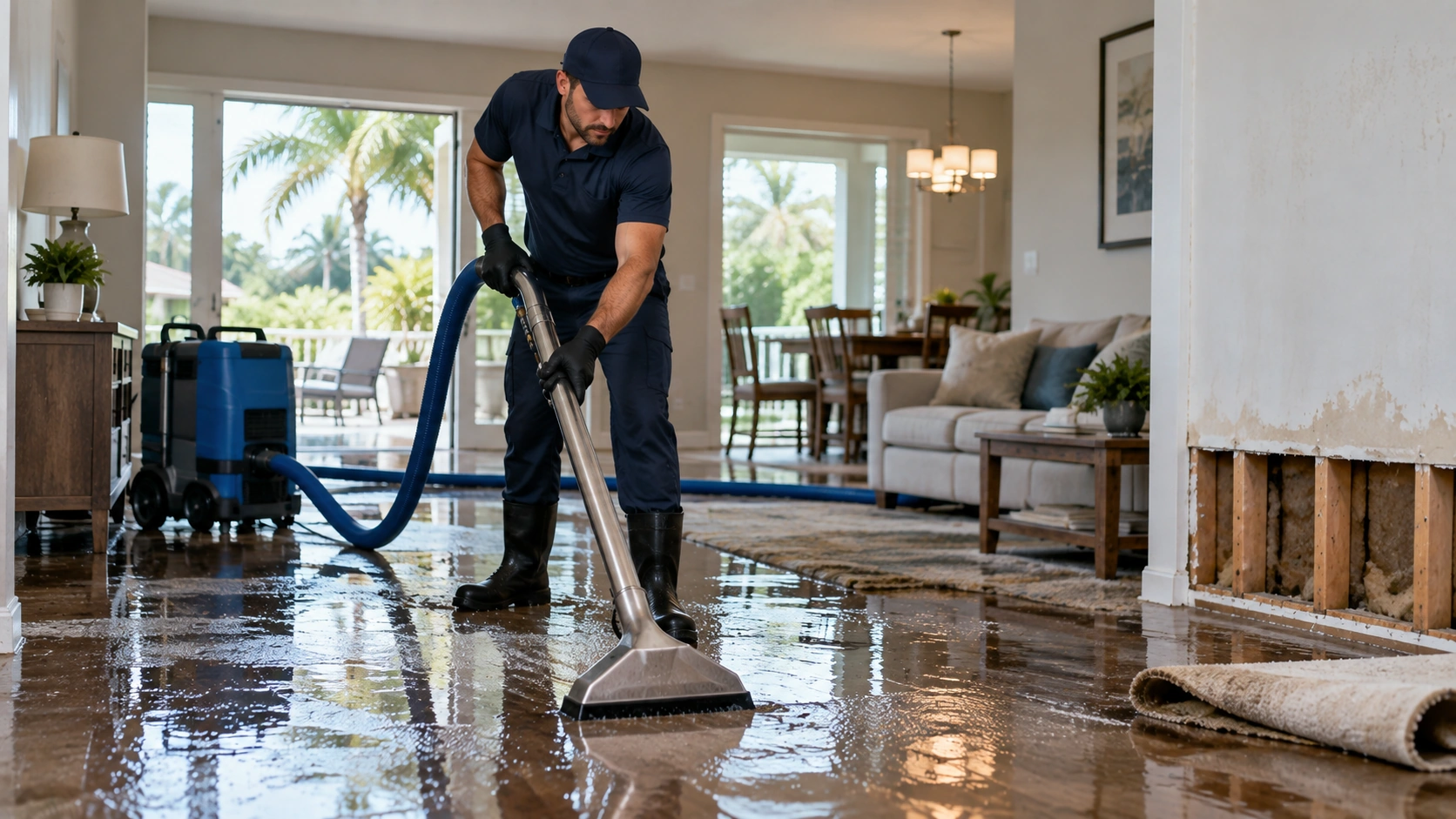
The restoration path for a water loss in Brandon runs from source to finish. The cause is found and controlled, and the affected areas are assessed with moisture detection. Bulk water is extracted, then drying equipment is placed to move air and remove humidity from the space. Progress is monitored with regular readings, and only when the structure has dried does cleaning, restoration and any repair work begin. Working in this order protects the building from hidden moisture.
Even inland, Brandon's summer humidity can stall drying. Air conditioning helps, but it is not a substitute for purpose-built dehumidification and airflow once building materials are wet. Extraction handles the bulk water, but structural drying deals with the moisture inside materials. Air movers and dehumidifiers are usually run together, and the equipment is adjusted as readings change. Drying targets are based on the materials involved, not on how dry a surface feels, and some materials, such as saturated insulation or damaged padding, may be removed rather than dried in place.
Not all water is the same. Clean water from a supply line is handled differently from rainwater that has crossed a roof and insulation, and both differ from sewage or flood water that has picked up contaminants. In Brandon, flooding and storm water can be contaminated, and sewage backups require specialized cleanup. Contaminated water affects which materials can be cleaned and which should be removed, so identifying the category early shapes the whole scope.
For a house or townhome in Brandon, the work usually focuses on kitchens, bathrooms, laundry rooms, flooring and ceilings, and on protecting belongings. For condominiums and offices, it may also involve coordination with property managers, associations or tenants. Businesses, from offices, hotels and lodging and restaurants and retail, add questions about downtime, inventory, records and reopening.
The first hours matter after a water loss in Brandon. Stop the source when it is safe, keep people away from hazards, take photos before anything is moved and request help with the assessment. The sooner wet materials are identified, the more likely it is that they can be dried rather than replaced.