Core service 1
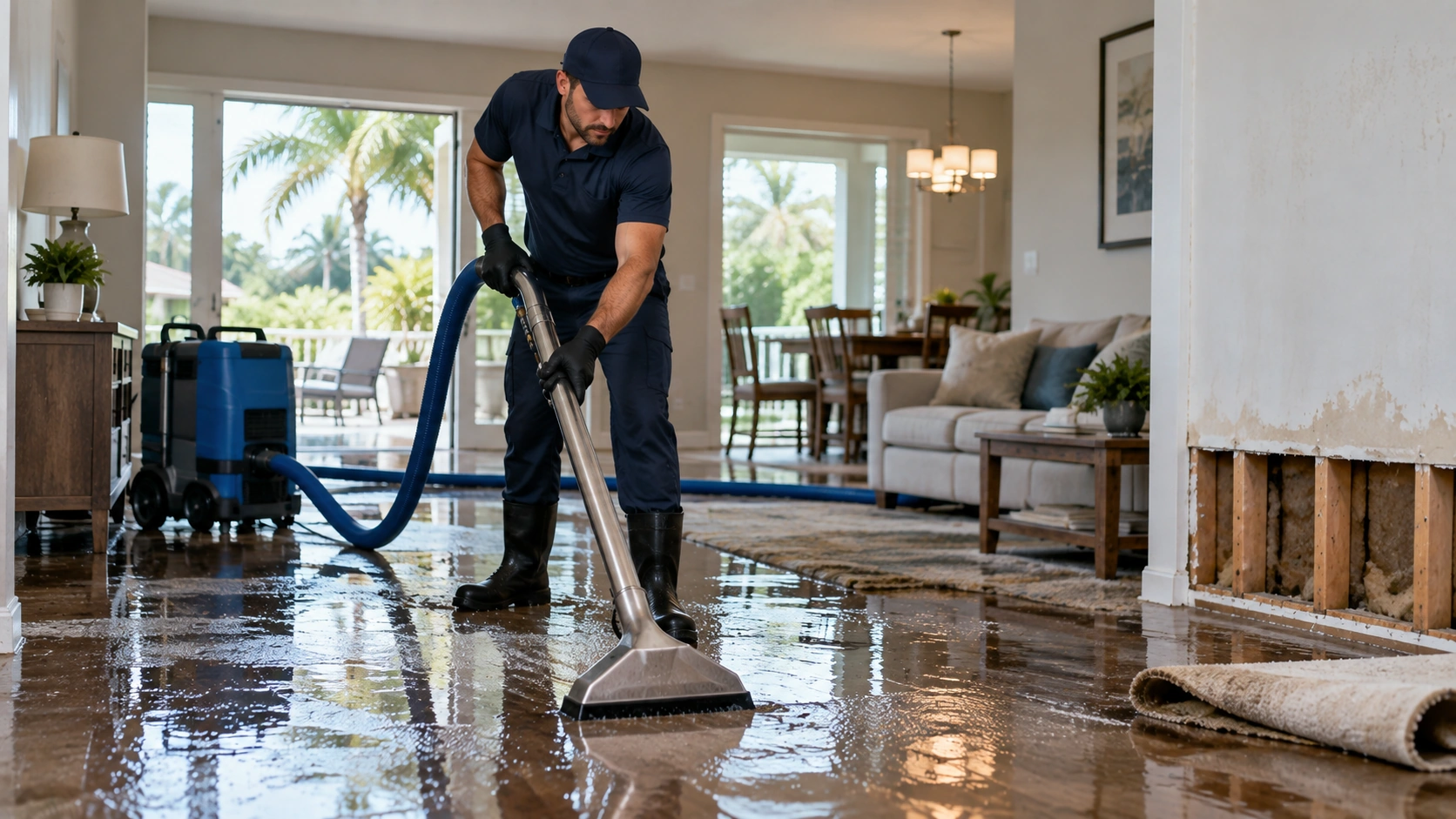
Water Damage Restoration in Clearwater
- Source
- Assessment
- Extraction
- Drying
- Monitoring
- Cleaning / Restoration
Water damage in Clearwater tends to combine slow and sudden causes. A slow leak behind a wall can quietly wet drywall and baseboards for weeks, while a storm can put water on the floor in an afternoon. Both end in the same place: wet building materials that need to be dried in a controlled way. Owners in Clearwater Beach, Dunedin and Belleair Beach face a similar mix of causes, but details such as ground elevation, drainage and construction age can change the outcome from one Clearwater address to another.
Around Tampa Bay, summer thunderstorms are frequent, and heavy rain on already saturated ground can flood streets and low yards quickly.
Because the local property mix includes condominiums, offices and hotels, no two water losses in Clearwater look exactly alike. A leak in one type of building may stay within a single room, while the same failure in another can reach neighboring spaces. Restoration planning starts with understanding the building, not with a one-size-fits-all plan.
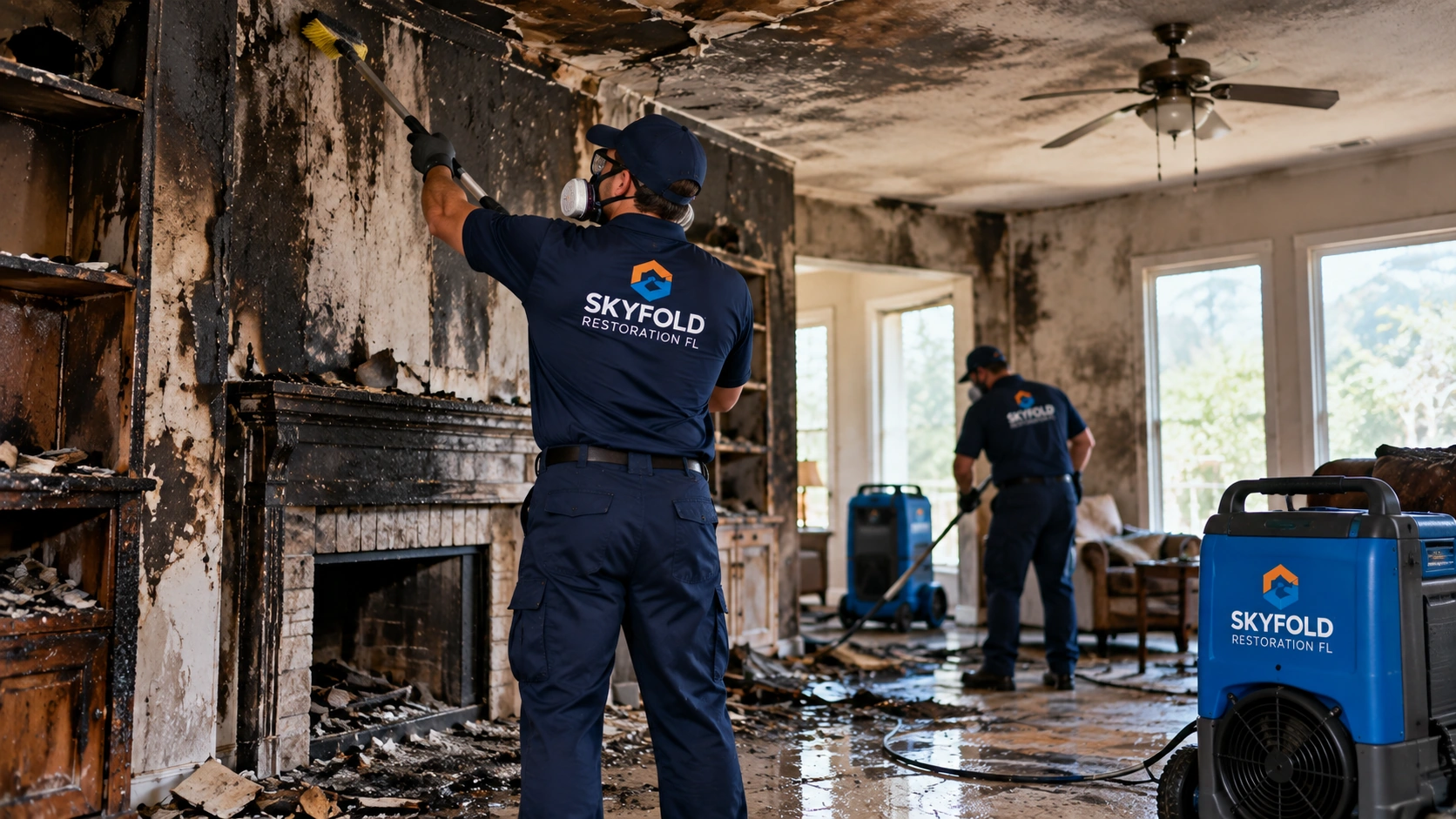
Whether the loss is small or large, the logic is the same in Clearwater: source, assessment, extraction, drying, monitoring, then cleaning and restoration. Each step depends on the one before it. Extraction without assessment can miss wet materials, and repairs without verified drying can hide damp framing behind fresh paint. Documenting readings along the way also gives the property owner and insurer a record of how the structure responded.
Salt air and constant humidity mean a structure in Clearwater rarely dries on its own; controlled dehumidification and airflow do the real work, and readings need to be checked against a dry standard, not judged by touch. Extraction handles the bulk water, but structural drying deals with the moisture inside materials. Air movers and dehumidifiers are usually run together, and the equipment is adjusted as readings change. Drying targets are based on the materials involved, not on how dry a surface feels, and some materials, such as saturated insulation or damaged padding, may be removed rather than dried in place.
Not all water is the same. Clean water from a supply line is handled differently from rainwater that has crossed a roof and insulation, and both differ from sewage or flood water that has picked up contaminants. In Clearwater, flooding and storm water can be contaminated, and sewage backups require specialized cleanup. Contaminated water affects which materials can be cleaned and which should be removed, so identifying the category early shapes the whole scope.
For a house or townhome in Clearwater, the work usually focuses on kitchens, bathrooms, laundry rooms, flooring and ceilings, and on protecting belongings. For condominiums and offices, it may also involve coordination with property managers, associations or tenants. Businesses, from offices, hotels and lodging and restaurants and retail, add questions about downtime, inventory, records and reopening.
If you are dealing with water in Clearwater, call as soon as you can safely do so. Shut off the water source if it is safe, avoid electrical hazards, photograph the damage and move valuables out of the wet area. Do not wait for surfaces to look dry, because moisture in walls and floors often remains long after the visible signs fade.