
1
Turn Off the AC
Stop the condensate at its source. Switch the thermostat to off so no more water is produced while you work. This also protects the blower and electronics from water exposure.
A clogged AC drain line is one of the most common causes of water damage in Florida homes, and one of the most preventable. Your air conditioner pulls gallons of moisture from the air every day; when the drain line clogs with algae, all that water overflows into ceilings, walls, and closets. Here is why it happens, how to spot it early, and how to keep it clear.
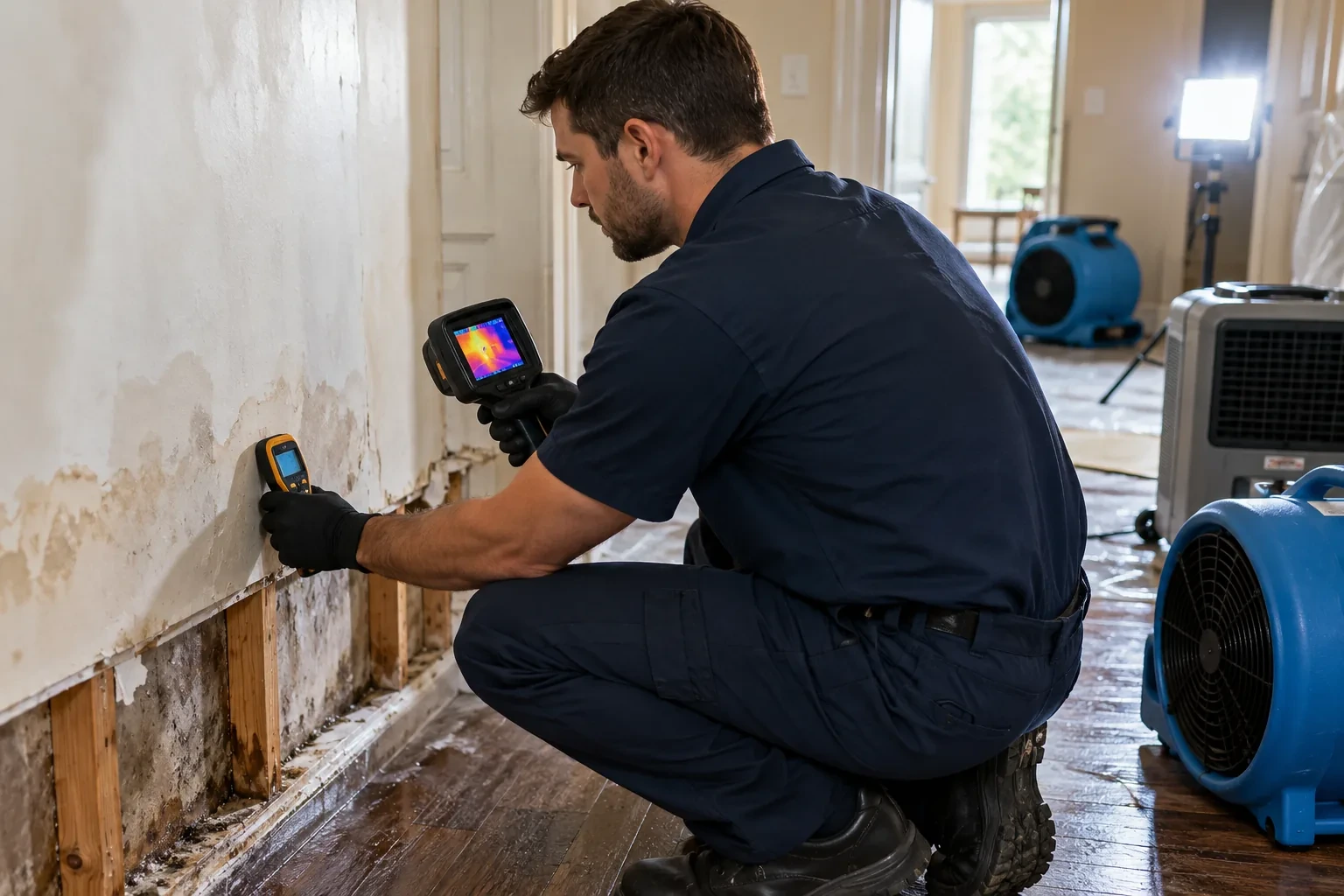
An AC drain line clogs when algae, mold, or debris block the condensate drain, causing the drain pan to overflow into your ceiling or closet. Warning signs: water stains near the air handler, musty smell when the AC runs, the AC shutting off unexpectedly, or visible water in the drain pan. Prevention is simple: flush the line every 2 to 3 months during cooling season and make sure your unit has a working float switch.
Understanding the system makes the failure obvious.
As warm Florida air passes over your evaporator coil, moisture condenses, just like on a cold glass. That condensate drips into a drain pan and flows out through a narrow PVC line, usually to the outdoors or a plumbing drain. A typical Florida system removes several gallons per day during summer. The line is dark, damp, and warm: perfect growing conditions for algae and bacterial slime. Over weeks, the slime narrows the line until water backs up into the pan, then over the pan's edge and into your home.
Florida's extra-long cooling season means more condensate and faster buildup than in northern states, where the AC rests for months. Units in hot attics grow algae fastest of all. This is why AC drain overflows spike every Florida summer, and why the fix is maintenance, not luck. Homeowners who have suffered one overflow often install a secondary overflow sensor or a smart water detector in the pan as backup, so the next clog announces itself with a phone alert instead of a ceiling stain. If water has already spread, our water extraction service handles the cleanup while you arrange the AC repair.
Stop the condensate at its source. Switch the thermostat to off so no more water is produced while you work. This also protects the blower and electronics from water exposure.
Towels and buckets around the overflow. If a ceiling is bulging with trapped water, do not poke it yourself; a controlled release by a professional avoids a collapse and limits the spread.
Use a wet/dry vacuum on the outdoor drain exit for a few minutes, then flush with white vinegar. If water does not flow freely afterward, call an HVAC technician; the clog may be deep in the line or the pan may be damaged.
Look for stained drywall, sagging ceiling texture, and damp insulation around the unit. Condensate is relatively clean water, but soaked drywall still needs structural drying and sometimes removal.
Do not assume a small overflow dries harmlessly. In Florida humidity, damp drywall and insulation start the mold timeline within a day or two. Verify with moisture readings or professional drying.
Clearing the clog is step one; preventing the next one is step two. Add a float switch if missing, establish a flushing schedule, and have the HVAC tech check the pan condition at the next service.
More whole-home routines in our Florida prevention guide.
Every 2 to 3 months during cooling season, which in much of Florida means most of the year. Homes with attic units or a history of clogs should stay on the shorter interval. Mark it on the same schedule as filter changes so you do not forget.
We recommend white vinegar instead. Bleach can corrode metal drain pans, damage rubber components, and harm septic systems. Vinegar is effective against the algae that causes most clogs and is safe for the system.
Most likely the float switch is doing its job: the drain pan is full and the switch cut power to prevent overflow. Do not bypass it. Clear the clog with a wet-vac and vinegar flush, verify water flows freely, then restart.
It starts relatively clean but picks up dust, algae, and microbial growth sitting in the pan and line. It is not sewage-level contamination, but soaked materials still need proper drying, and you should not assume a large overflow is harmless.
Often yes, if the overflow was sudden and you maintained the system reasonably. A clog that built up over years of zero maintenance can be denied as neglect, which is another reason to keep a simple maintenance log. See our insurance guide.
The stain means water was there, even if the line cleared itself or the pan dried. Stained drywall should be checked with a moisture meter; if readings are elevated, it needs drying or removal. Do not just paint over it, because trapped moisture and mold will return. Our signs resource covers hidden moisture checks.
Whole-home checklists for Florida homeowners.
Read guideWhy fast drying after an overflow matters.
Read guideAnother common sudden leak, and how to respond.
Read guideDo not just paint over it. Call for inspection and structural drying, or find your city.